


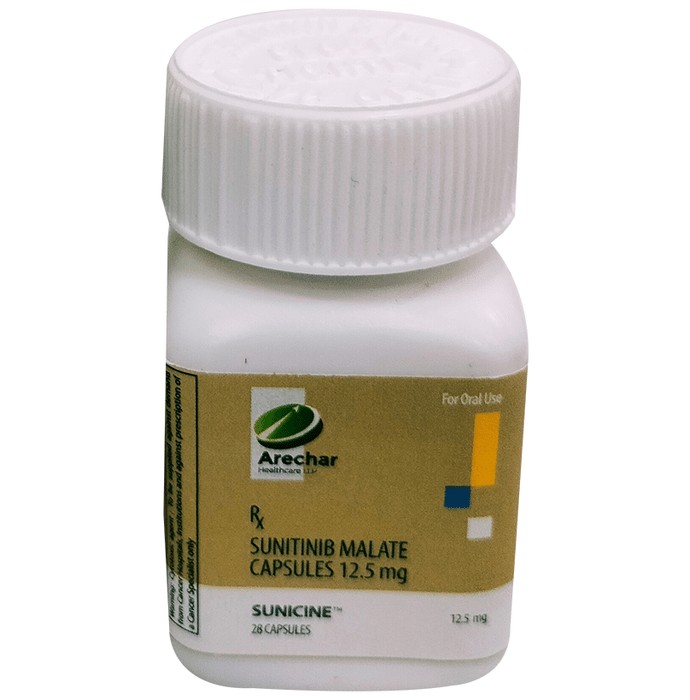
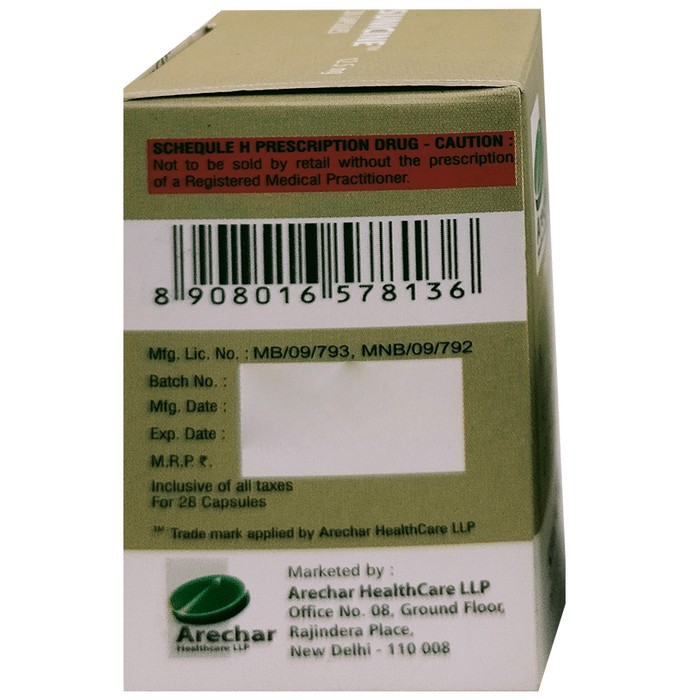
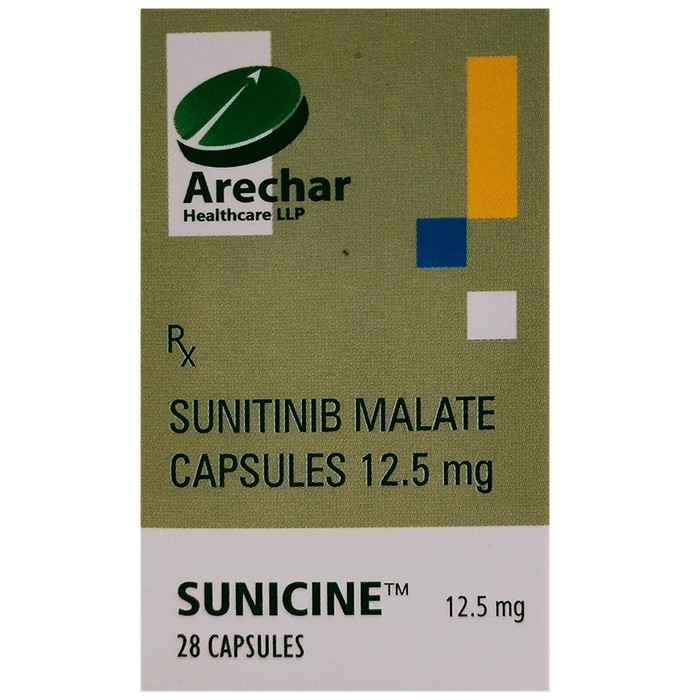
Sunicine Capsule

Marketer
Arechar Healthcare
Salt Composition
Sunitinib (12.5mg)
Overview Sunicine Capsule
Kapsule Suni is indicated for kidney cancer and gastrointestinal stromal tumor treatment. Its mechanism involves inhibiting enzymes crucial for cancer cell proliferation, thus reducing tumor size and growth rate. Kapsule Suni can be administered with or without food, but consistent daily timing is recommended for optimal efficacy. Dosage and frequency are determined by your physician based on your condition and may be adjusted. Strictly adhere to your doctor's prescribed regimen; incorrect usage or overdose can lead to severe adverse reactions. Therapeutic effects may take weeks or months to manifest; discontinue only under medical supervision. Common side effects include fatigue, loose stools, queasiness, emesis, altered taste perception, and reduced appetite. Regular blood pressure and thyroid function monitoring may be advised. Kapsule Suni can lower blood glucose, potentially causing hypoglycemia and fainting; diabetics should monitor their blood sugar closely and discuss potential anti-diabetic medication adjustments with their doctor. Prior to commencing treatment, inform your physician of any pre-existing cardiac, hepatic, renal, or hemorrhagic conditions. Inform your healthcare provider of all other medications you are taking, as interactions are possible. This medication is contraindicated during pregnancy and lactation; reliable contraception is essential for both partners throughout treatment.
Primary Ingredients of Sunicine Capsule
No text provided. Please provide the text you want me to rephrase.
Uses of Sunicine Capsule
Kidney and gastrointestinal stromal tumor therapies
Major Benefits of Sunicine Capsule:
Follow your doctor's instructions precisely regarding dosage and treatment length for this medication. Sunicine Capsules can be ingested with or without food; however, consistent daily timing is recommended.
Common Side effects of Sunicine Capsule:
- Hand-foot syndrome
- Bleeding disorder
- Low blood platelets
- Decreased appetite
- Nausea
- Vomiting
- Weakness
- Abdominal pain
- Indigestion
- High blood pressure
- Diarrhea
- Stomatitis (Inflammation of the mouth)
- Taste change
How to use Sunicine Capsule:
Follow your physician's instructions precisely regarding dosage and treatment length for this medication. Sunicine Capsules can be consumed with or without food; however, consistent daily timing is recommended.
How Sunicine Capsule works:
Sunicine capsules are an anticancer agent that inhibits cancer cell growth. Their mechanism involves binding to and disabling specific cell-surface tyrosine kinase proteins, vital for cancer progression. Concurrently, they suppress the formation of new blood vessels within the tumor, thus limiting cancer spread.
SAFETY ADVICE
 AlcoholCONSULT YOUR DOCTOR
Alcohol consumption alongside Sunicine Capsules may pose unknown risks. Seek medical advice before combining them.
 PregnancyCONSULT YOUR DOCTOR
The use of Sunicine Capsules during pregnancy may pose risks. While human data is scarce, animal research indicates potential harm to the fetus. A physician will assess the potential advantages against any possible dangers prior to prescribing. Always seek medical advice.
 Breast feedingCONSULT YOUR DOCTOR
There is likely a risk associated with using Sunicine Capsules while breastfeeding. Available human data indicates potential transfer of the medication into breast milk, posing a possible threat to the infant.
 DrivingUNSAFE
Driving ability may be impaired by Sunicine Capsule side effects, including potential dizziness. Refrain from driving or operating machinery if dizziness occurs during treatment with this medication.
 KidneySAFE IF PRESCRIBED
Patients with kidney disease can safely take Sunicine Capsules without requiring any alteration to the prescribed dosage.
 LiverSAFE IF PRESCRIBED
Patients with hepatic impairment can safely take Sunicine capsules without requiring any alteration to the prescribed dosage.
What if you forget to take Sunicine Capsule :
Omit any missed Sunicine Capsule dose and resume your regular dosing regimen. Avoid taking a double dose.
Facts to Know About Sunicine Capsule
| Label | Value |
|---|---|
| Type of Compound | Compounds derived from indole and pyrrole. |
| Potential for Dependence | None. |
| Type of Medication | Cancer-fighting medications |
 3,018 People bought this recently