


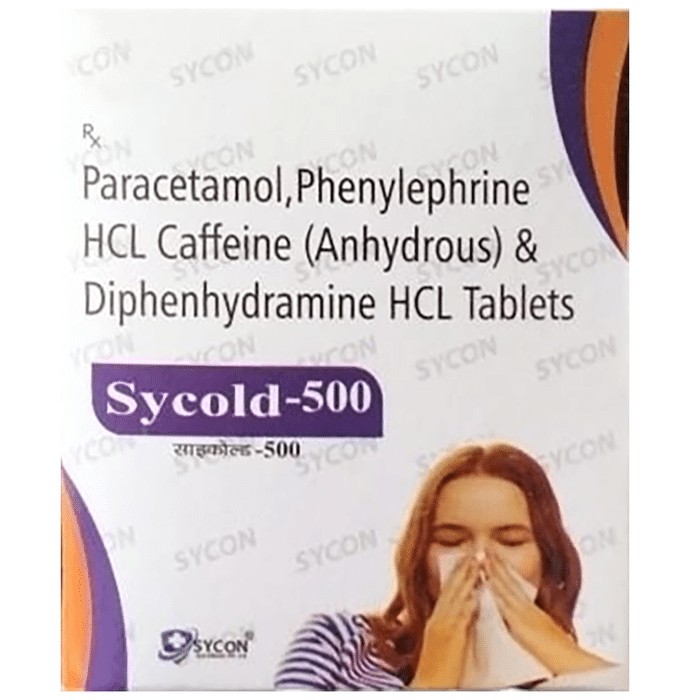
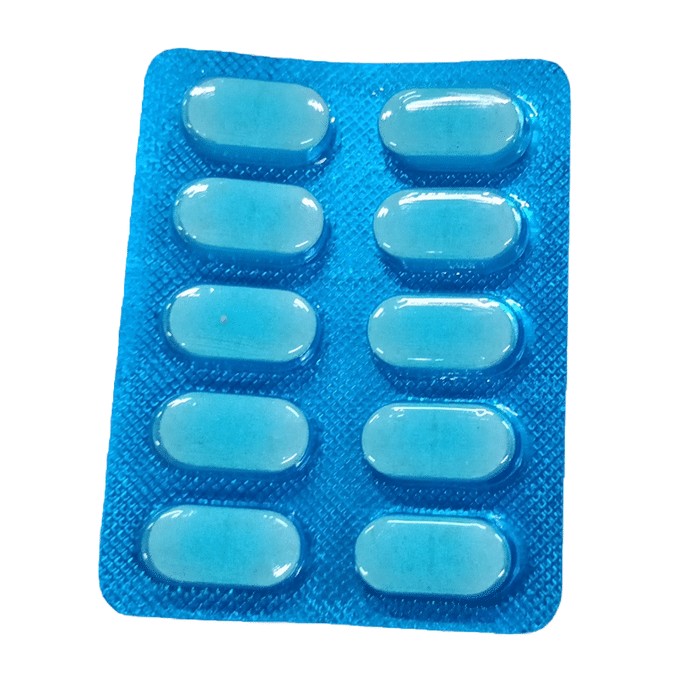
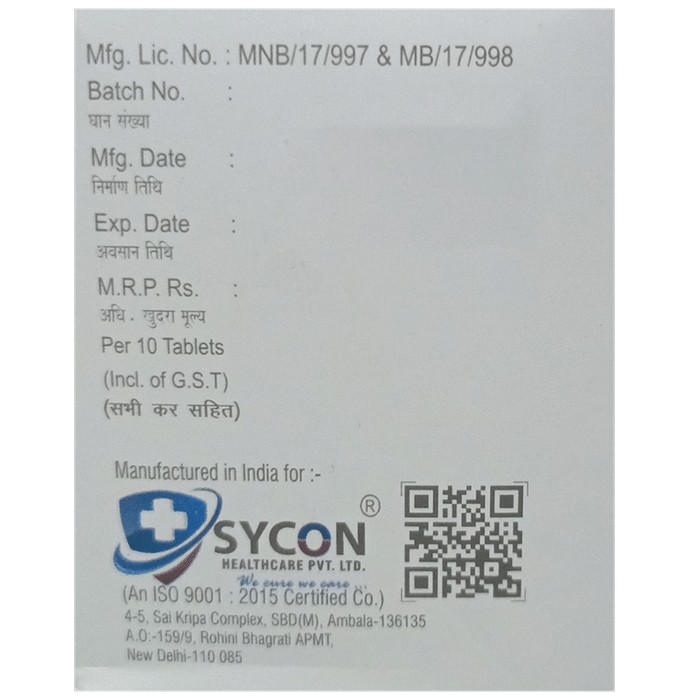
Sycold 500 Tablet

Marketer
Sycon Healthcare Pvt Ltd
Salt Composition
Caffeine (30mg) + Diphenhydramine (25mg) + Paracetamol (500mg) + Phenylephrine (5mg)
Overview Sycold 500 Tablet
ContacCold 500mg tablets offer symptomatic relief from the common cold. This medication temporarily alleviates nasal congestion and assists in managing allergy symptoms such as rhinorrhea and lacrimation. Dosage and duration of ContacCold 500mg should strictly follow your physician's instructions; taking it with food may minimize stomach discomfort. Your prescribed dosage will be personalized based on your condition and response to treatment. Complete the prescribed course; premature discontinuation may lead to symptom recurrence and condition exacerbation. Inform your doctor of all other medications you're using, as interactions are possible. Common side effects include nausea, emesis, abdominal pain, sleeplessness, agitation, impaired coordination, and cephalgia. These are usually transient and self-limiting. Report any concerning side effects immediately to your doctor. Drowsiness and dizziness may occur; refrain from driving or activities requiring alertness until the effects are known. Alcohol consumption should be avoided due to the increased risk of dizziness. Prior to commencing treatment, disclose any liver or kidney ailments to ensure appropriate dosage adjustment. Similarly, inform your doctor if you are pregnant, considering pregnancy, or breastfeeding.
Uses of Sycold 500 Tablet
Managing the common cold
Major Benefits of Sycold 500 Tablet:
Administer this medication according to your physician's prescribed dosage and schedule. Ingest the tablet whole; avoid chewing, crushing, or fracturing it. Sycold 500 Tablets can be consumed with or without food, although consistent timing is recommended.
Common Side effects of Sycold 500 Tablet:
- Nausea
- Vomiting
- Insomnia (difficulty in sleeping)
- Dizziness
- Impaired coordination
- Headache
- Sedation
- Inability to concentrate
- Irritability
- Tremors
- Diarrhea
- Dryness in mouth
- Fatigue
- Blurred vision
How to use Sycold 500 Tablet:
Follow your doctor's instructions precisely regarding dosage and treatment length for this medication. The tablet should be swallowed whole; avoid chewing, crushing, or breaking it. Sycold 500 Tablets can be taken with or without food, however, consistent timing is recommended.
How Sycold 500 Tablet works:
Paracetamol, diphenhydramine, phenylephrine, and caffeine combine in Sycold 500 tablets to alleviate typical cold symptoms.
SAFETY ADVICE
 AlcoholUNSAFE
Consuming alcohol while taking Sycold 500 Tablet is inadvisable.
 PregnancyCONSULT YOUR DOCTOR
The use of Sycold 500 Tablet during pregnancy may pose risks. While human research is scant, animal studies indicate potential harm to the fetus. A physician will assess the potential advantages against any risks prior to prescribing. Physician consultation is advised.
 Breast feedingSAFE IF PRESCRIBED
Breastfeeding mothers can likely use Sycold 500 Tablet without significant risk to their infant, based on a limited amount of available human data indicating minimal drug transfer.
 DrivingUNSAFE
Taking Sycold 500 Tablets might reduce attentiveness, impair vision, and cause drowsiness or dizziness. Driving should be avoided if these effects are experienced.
 KidneyCAUTION
Patients with severe kidney impairment should exercise caution when using Sycold 500 Tablets, as dose modification may be necessary. Physician consultation is recommended. Regular blood pressure checks are advisable to guide dosage adjustments.
 LiverCAUTION
Patients with liver impairment should exercise caution when using Sycold 500 Tablets. Dosage modification may be necessary; physician consultation is advised.
What if you forget to take Sycold 500 Tablet :
Should you forget a Sycold 500 Tablet dose, administer it immediately. Nevertheless, if your next dose is imminent, omit the missed one and resume your usual dosing regimen. Avoid taking a double dose.
Facts to Know About Sycold 500 Tablet
| Label | Value |
|---|---|
| Developing Habits | No. |
| Type of Therapy | Breathing |
 3,018 People bought this recently