



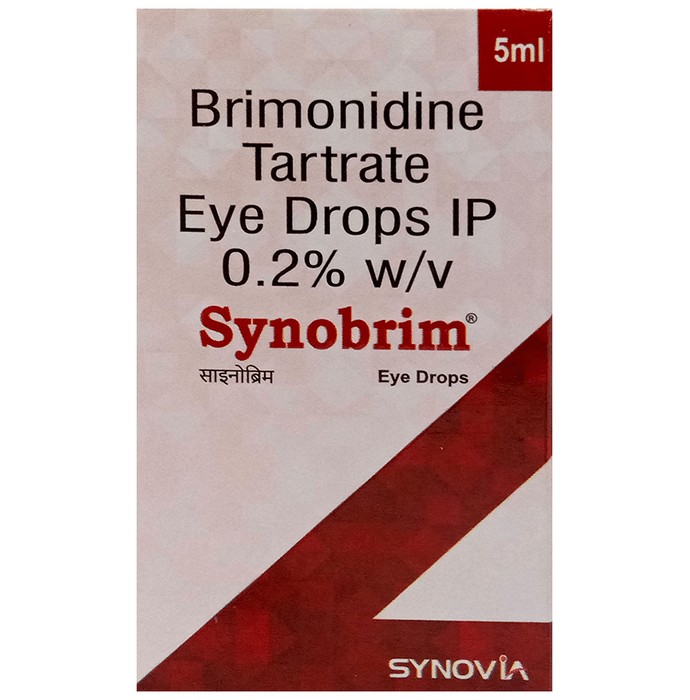
Synobrim Eye Drop

Marketer
Synovia Life Sciences Pvt Ltd
Salt Composition
Brimonidine (0.2% w/v)
Overview Synobrim Eye Drop
Ocu-Press, an ophthalmic solution, treats elevated intraocular pressure associated with glaucoma and ocular hypertension. It lowers excessive eye pressure, mitigating vision loss risk. This medication can be administered independently or concurrently with other pressure-reducing eye drops. Ocu-Press is for topical application only. Adhere strictly to your physician's prescribed dosage and regimen. Contact lenses should be removed prior to application. Prevent contamination by avoiding contact between the dropper tip and any surface. Optimal results are achieved with nightly administration. Potential side effects, including allergic conjunctivitis, burning, conjunctival inflammation and hyperemia, eye irritation, elevated blood pressure, ocular allergic reactions, dry mouth, and blurred vision may occur. Persistent or worsening symptoms necessitate immediate medical consultation. Following administration, refrain from driving if visual acuity or reaction time is impaired.
Uses of Synobrim Eye Drop
Elevated intraocular pressure conditions
Major Benefits of Synobrim Eye Drop:
Apply this medication externally only. Administer as directed by your physician, adhering to the prescribed dosage and treatment schedule. Always consult the product label for application instructions. Position the dropper near the eye, avoiding contact, then carefully dispense the medication into the lower conjunctival sac. Remove any excess solution.
Common Side effects of Synobrim Eye Drop:
- Eye itching
- Allergic reaction in eye
- Conjunctival hyperemia
- Follicular conjunctivitis
- Dryness in mouth
- Allergic conjunctivitis
- Burning sensation
- High blood pressure
- Visual disorder
How to use Synobrim Eye Drop:
Apply this medication externally only. Follow your physician's instructions precisely regarding dosage and treatment length. Consult the product label for detailed application guidance. Position the dropper near, but not touching, the eye. Carefully dispense the medication into the lower eyelid sac. Remove any excess solution.
How Synobrim Eye Drop works:
Synobrim Eye Drops, a sympathomimetic agent, reduces intraocular pressure by diminishing aqueous humor production.
SAFETY ADVICE
 AlcoholNone
No known drug interactions.
 PregnancyCONSULT YOUR DOCTOR
Use of Synobrim Eye Drops during pregnancy may pose risks. While human research is scarce, animal studies indicate potential harm to the fetus. A physician will assess the advantages against possible dangers prior to prescription. Seek medical advice.
 Breast feedingCONSULT YOUR DOCTOR
Lactation and the use of Synobrim Eye Drops are likely incompatible. Available human data indicates potential transfer of the medication into breast milk, posing a risk to the infant. Minimizing this transfer involves applying pressure to the inner eye corner for at least 60 seconds, followed by blotting away any excess solution.
 DrivingUNSAFE
Using Synobrim Eye Drops may result in side effects that impair driving ability. These drops can cause blurry or distorted vision, potentially more pronounced in low-light conditions, further impacting driving safety.
 KidneyNone
No known drug interactions.
 LiverNone
No known drug interactions.
What if you forget to take Synobrim Eye Drop :
Should you forget a Synobrim Eye Drop dose, administer it promptly. If your next dose is imminent, however, omit the missed dose and resume your usual dosing regimen. Avoid taking a double dose.
Facts to Know About Synobrim Eye Drop
| Label | Value |
|---|---|
| Chemical Type | Quinoxaline-based Compound |
| Developing Habits | No. |
| Treatment Category | Ophthalmology |
 3,018 People bought this recently