


Tacsure 1.0 Capsule

Marketer
Merynova Lifesciences India Private Limited
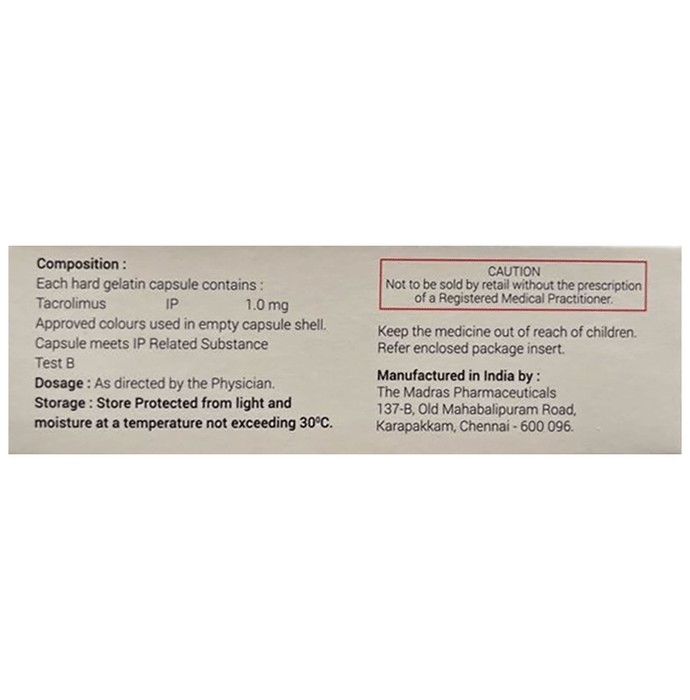
Salt Composition
Tacrolimus (1.0mg)
Overview Tacsure 1.0 Capsule
Post-transplant, Immunosuppressant Capsule (1.0 mg) works in conjunction with other medications to prevent organ rejection (e.g., liver, kidney, heart). By suppressing the immune system, it minimizes the body's attack on the new organ. This medication, an immunosuppressant, is administered according to your transplant type, weight, and other concurrent medications; always follow your physician's precise instructions. For optimal absorption, take on an empty stomach, at least one hour before or two hours after food. Consistent use is crucial for efficacy; discontinuation raises the risk of organ rejection. Potential side effects, including diabetes exacerbation and kidney complications (requiring immediate medical attention), tremor, infections, hypertension, headache, and insomnia, may occur. Report persistent or worsening side effects to your doctor. Immunosuppression increases infection susceptibility. Prior to commencing treatment, disclose any pre-existing conditions like kidney, liver, or heart disease, diabetes, or hypertension, and all other medications (especially those for infections, pain, or arthritis), as interactions are possible. Minimize sun and UV exposure due to increased skin cancer risk. Reliable contraception is essential for both men and women. Use during pregnancy or breastfeeding is generally discouraged unless medically necessary. Regular medical monitoring, including frequent blood pressure checks, is required throughout treatment.
Primary Ingredients of Tacsure 1.0 Capsule
No text provided to rephrase.
Uses of Tacsure 1.0 Capsule
Avert organ rejection in transplant recipients.
Major Benefits of Tacsure 1.0 Capsule:
Follow your doctor's instructions precisely regarding dosage and treatment length for this medication. Consume Tacsure 1.0 Capsules on an empty stomach.
Common Side effects of Tacsure 1.0 Capsule:
- High blood pressure
- Increased glucose level in blood
- Kidney damage
- Insomnia (difficulty in sleeping)
- Tremors
- Headache
- Abnormal liver function tests
- Infection
How to use Tacsure 1.0 Capsule:
Follow your doctor's instructions precisely regarding dosage and treatment length for this medication. Consume Tacsure 1.0 Capsule on an empty stomach.
How Tacsure 1.0 Capsule works:
Immunosuppressant Tacsure 1.0 Capsules reduce the body's immune reaction after organ transplantation (such as liver, kidney, or heart). This action promotes the body's acceptance of the transplanted organ.
SAFETY ADVICE
 AlcoholUNSAFE
Avoid alcohol consumption while taking Tacsure 1.0 Capsules.
 PregnancyCONSULT YOUR DOCTOR
Employing Tacsure 1.0 Capsules during pregnancy may pose risks. While human research is scarce, animal studies indicate potential harm to a developing fetus. A physician will assess the advantages against possible hazards prior to prescribing. Seek medical advice.
 Breast feedingCONSULT YOUR DOCTOR
Limited evidence indicates that Tacsure 1.0 Capsule may pose a risk to breastfeeding infants. The drug's potential transfer into breast milk and subsequent harm to the baby necessitates caution during lactation.
 DrivingUNSAFE
Driving should be avoided if Tacsure 1.0 Capsule causes drowsiness, blurred vision, dizziness, or reduced awareness.
 KidneyCAUTION
Patients with kidney impairment should exercise caution when using Tacsure 1.0 Capsules. Dosage modification may be necessary. Physician consultation is recommended.
 LiverCAUTION
Patients with hepatic impairment should exercise caution when using Tacsure 1.0 Capsules. Dosage modification may be necessary. Physician consultation is recommended.
What if you forget to take Tacsure 1.0 Capsule :
Should you forget a Tacsure 1.0 Capsule dose, administer it immediately. Nevertheless, if your next scheduled dose is imminent, omit the missed dose and resume your usual regimen. Avoid taking a double dose.
Facts to Know About Tacsure 1.0 Capsule
| Label | Value |
|---|---|
| Chemical Type | Macrolide Antibiotics |
| Developing Habits | No. |
| Type of Therapy | Cancer Medications |
 3,018 People bought this recently