


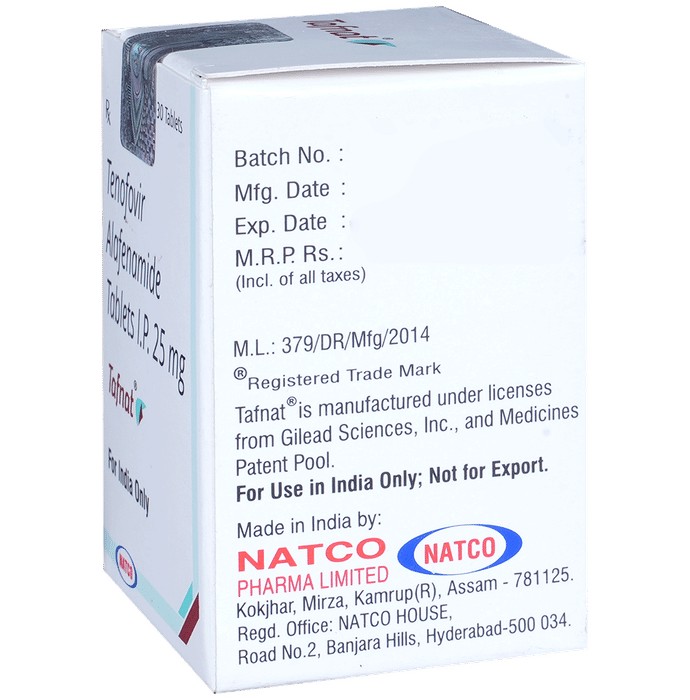
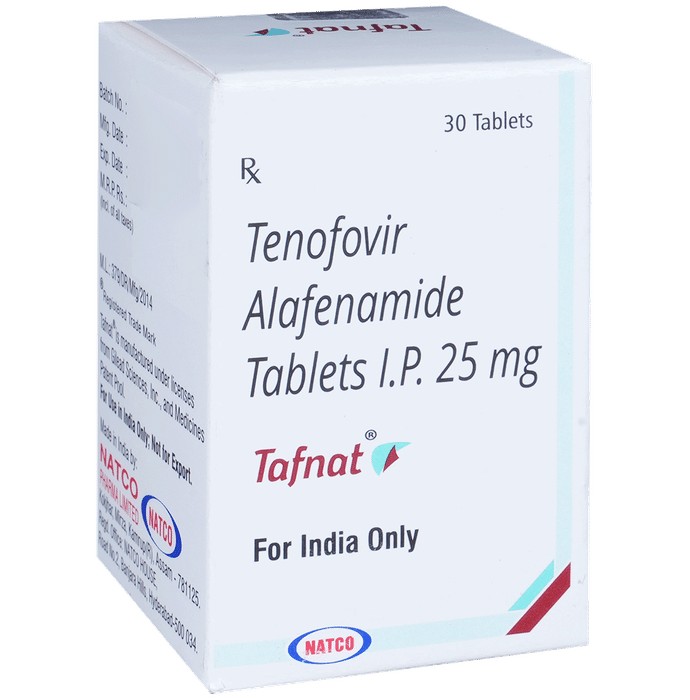
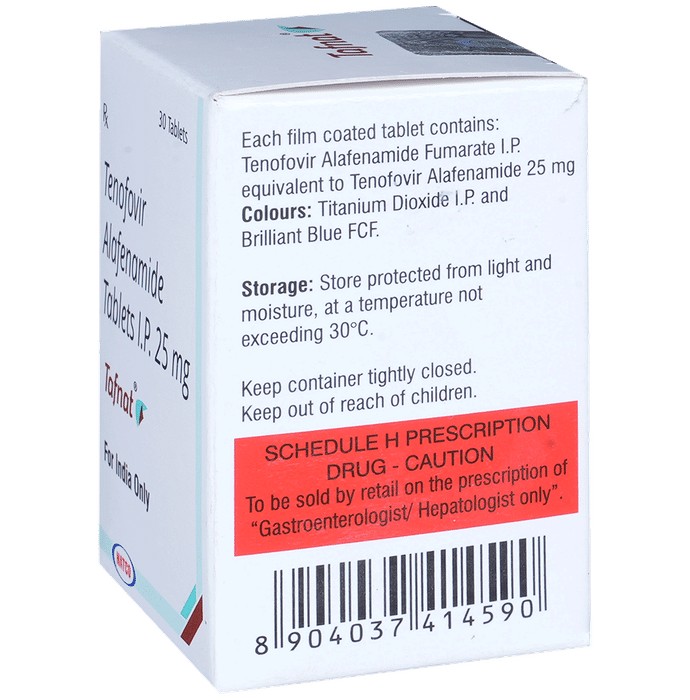
Tafnat Tablet

Marketer
Natco Pharma Ltd
Salt Composition
Tenofovir Alafenamide (25mg)
Overview Tafnat Tablet
Tafinlar tablets combat HIV and chronic hepatitis B (HBV) by inhibiting viral replication within human cells, thereby suppressing viral load and aiding infection resolution. Dosage and treatment duration should strictly adhere to your physician's instructions; complete the prescribed course regardless of symptom improvement. Administer with food to optimize absorption. Continue treatment until medically advised to discontinue. Common side effects include headache, nausea, diarrhea, arthralgia, abdominal discomfort, and dyspepsia. Persistent or bothersome side effects warrant medical attention. Serious, though infrequent, reactions may involve skin rashes or hepatic impairment, necessitating close monitoring, especially initially. Prior to commencing treatment, disclose any pre-existing skin conditions, hepatic or renal dysfunction. Regular blood tests to assess hematological parameters and liver function are typically required during therapy. Alcohol consumption should be avoided due to the heightened risk of liver injury. Pregnant or lactating individuals require physician consultation before use. Individuals with HIV should practice safe sex and avoid sharing personal items to mitigate transmission. Discuss safe sex practices, such as condom use, with your doctor to prevent HIV spread.
Primary Ingredients of Tafnat Tablet
No text provided to rephrase.
Uses of Tafnat Tablet
Managing persistent hepatitis B virus (HBV) infection
Major Benefits of Tafnat Tablet:
Follow your doctor's instructions precisely regarding the dosage and treatment length for this medication. Ingest the Tafnat Tablet whole; avoid chewing, crushing, or breaking it. It should be administered with a meal.
Common Side effects of Tafnat Tablet:
- Headache
- Diarrhea
- Nausea
- Fatigue
- Abdominal pain
- Cough
- Back pain
- Indigestion
- Joint pain
How to use Tafnat Tablet:
Consume this medication precisely as prescribed by your physician, adhering to both the dosage and treatment schedule. Ingest the tablet whole; avoid chewing, crushing, or fracturing it. It is recommended to take Tafnat Tablet with a meal.
How Tafnat Tablet works:
Tafnat Tablet acts as an antiviral agent, inhibiting viral replication within human cells. This action prevents further viral production, thus resolving the infection.
SAFETY ADVICE
 AlcoholCONSULT YOUR DOCTOR
Alcohol consumption alongside Tafnat Tablet poses an uncertain safety profile. Seek medical advice before combining them.
 PregnancySAFE IF PRESCRIBED
The use of Tafnat Tablets during pregnancy is generally deemed safe. Preclinical trials in animals revealed minimal or no harmful consequences for fetal development; nevertheless, data from human trials remain scarce.
 Breast feedingSAFE IF PRESCRIBED
The use of Tafnat Tablet while breastfeeding is likely safe. Available human data indicates minimal risk to the infant.
 DrivingUNSAFE
Using Tafnat Tablets might reduce alertness, impair vision, or cause drowsiness and dizziness. Refrain from driving if these effects are experienced.
 KidneyCAUTION
Patients with kidney impairment should use Tafnat Tablets judiciously; dosage modification may be necessary. Physician consultation is advised.
 LiverSAFE IF PRESCRIBED
Tafnat Tablet appears to pose minimal risk for individuals with hepatic impairment. Existing evidence indicates dose modification may be unnecessary; however, physician consultation is recommended.
What if you forget to take Tafnat Tablet :
Should you forget a Tafnat Tablet dose, take it immediately. Nevertheless, if your next dose is imminent, omit the missed one and resume your usual dosing regimen. Never take a double dose.
Facts to Know About Tafnat Tablet
| Label | Value |
|---|---|
| Chemical Type | Base analog |
| Developing Habits | No. |
| Treatment Category | Antimicrobial Agents |
| Action Class | Reverse transcriptase inhibitors (NRTIs) – nucleoside/nucleotide analogs |
 3,018 People bought this recently