


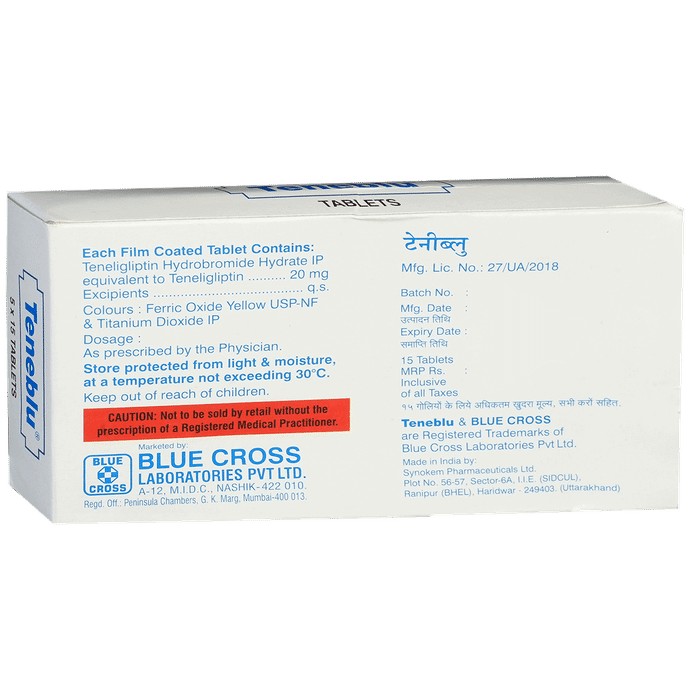

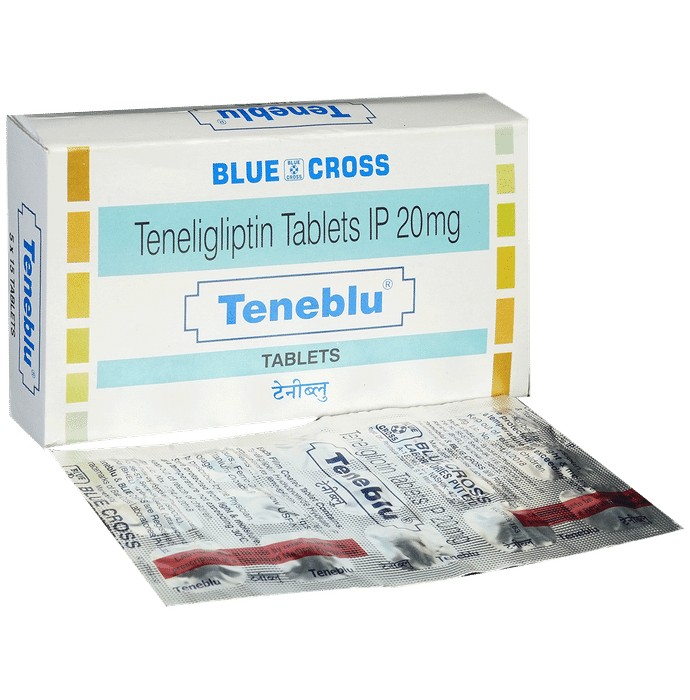
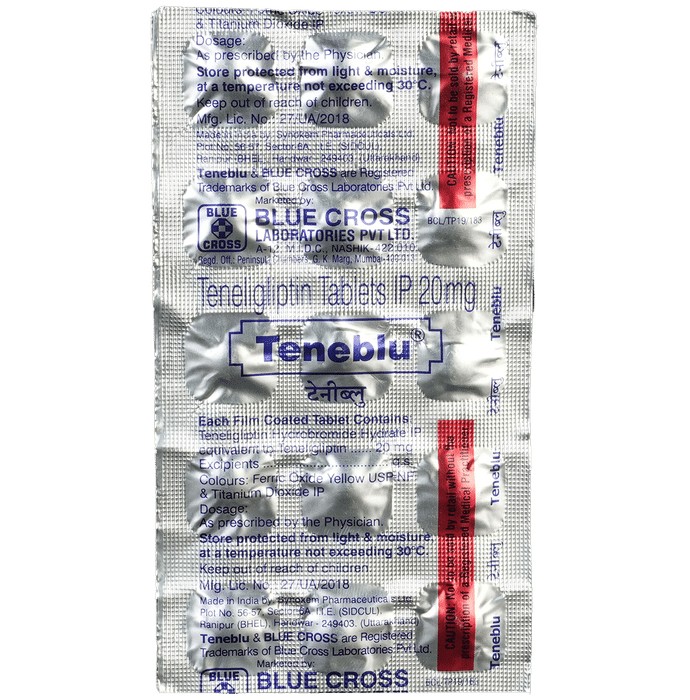
Teneblu Tablet

Marketer
Blue Cross Laboratories Ltd
Salt Composition
Teneligliptin (20mg)
Overview Teneblu Tablet
Glycemia Control tablets are indicated for the management of type 2 diabetes. Optimal blood glucose regulation is achieved through concurrent use with a balanced diet and consistent physical activity, mitigating the risk of severe diabetic complications such as nephropathy and vision impairment. Glycemia Control is typically prescribed when dietary modifications, exercise, or alternative medications fail to adequately manage blood sugar. Your physician may prescribe it as monotherapy or in conjunction with other antidiabetic agents. Administration is independent of meals. Dosage is individualized based on your clinical presentation and glycemic readings. Adhere strictly to your doctor's prescribed regimen. Consistent daily dosing at the same time maximizes therapeutic efficacy. Discontinue only under your physician's direction. This medication aids in blood sugar control, preventing long-term complications. Maintaining your doctor's recommended diet and exercise plan remains crucial throughout treatment. Lifestyle choices significantly impact diabetes management. Common adverse effects include hypoglycemia, altered bowel habits, vertigo, cephalalgia, and diarrhea. Recognizing hypoglycemic symptoms (lightheadedness, perspiration, dizziness, syncope, dry mouth) and implementing appropriate countermeasures (glucose tablets) is vital. Report persistent or concerning side effects to your doctor. Prior to initiating treatment, disclose any history of renal impairment, cardiovascular disease, or pancreatic disorders. Pregnant or lactating individuals should seek medical counsel before commencing treatment. Potential drug interactions may arise with concomitant medications; therefore, inform your physician of all current medications. Moderate alcohol consumption is advised due to the increased hypoglycemia risk. Regular monitoring, including renal function and blood glucose assessments, is necessary to ensure therapeutic efficacy.
Primary Ingredients of Teneblu Tablet
No text was provided to rewrite.
Uses of Teneblu Tablet
Managing type 2 diabetes
Major Benefits of Teneblu Tablet:
Administer this medication according to your physician's prescribed dosage and schedule. Ingest the tablet whole; avoid chewing, crushing, or fracturing it. Teneblu Tablet can be consumed with or without food, although consistent timing is recommended.
Common Side effects of Teneblu Tablet:
- Hypoglycemia (low blood glucose level)
- Constipation
- Dizziness
- Headache
- Diarrhea
- Increased body temperature
How to use Teneblu Tablet:
Administer this medication precisely as directed by your physician, adhering to the prescribed dosage and treatment schedule. Ingest the tablet whole; avoid chewing, crushing, or fracturing it. Teneblu Tablet can be consumed with or without food, although consistent timing is recommended for optimal results.
How Teneblu Tablet works:
Teneblu Tablet combats diabetes by stimulating insulin secretion from the pancreas and suppressing hyperglycemic hormones. This dual action lowers both fasting and postprandial glucose concentrations.
SAFETY ADVICE
 AlcoholUNSAFE
Avoid alcohol while taking Teneblu Tablet.
 PregnancyCONSULT YOUR DOCTOR
The use of Teneblu Tablet during pregnancy may pose risks. While human research is scarce, animal studies indicate potential harm to a developing fetus. A physician will assess the potential benefits against possible risks prior to prescribing. Seek medical advice before taking this medication.
 Breast feedingCONSULT YOUR DOCTOR
The use of Teneblu Tablet while breastfeeding is likely inadvisable. Available human data indicates potential transfer of the medication into breast milk, posing a possible risk to the infant.
 DrivingCAUTION
Driving ability can be impaired by both hypoglycemia and hyperglycemia. Refrain from driving if you experience these conditions.
 KidneySAFE IF PRESCRIBED
Teneblu Tablet poses no known safety concerns for patients with renal impairment, and no dosage alteration is necessary.
 LiverSAFE IF PRESCRIBED
Teneblu Tablet poses no safety concerns for patients with liver disease; no dosage modification is advised. Nevertheless, its efficacy and safety in individuals with severely compromised kidney function remain unproven.
What if you forget to take Teneblu Tablet :
Should you forget a Teneblu Tablet dose, administer it promptly. Nevertheless, if your next scheduled dose is imminent, omit the missed one and resume your usual dosing regimen. Avoid taking a double dose.
Facts to Know About Teneblu Tablet
| Label | Value |
|---|---|
| Chemical Category | Amino acid amides |
| Developing Habits | No. |
| Treatment Category | Diabetes Treatment |
| Actions | Dipeptidyl peptidase-4 inhibitors |
 3,018 People bought this recently