


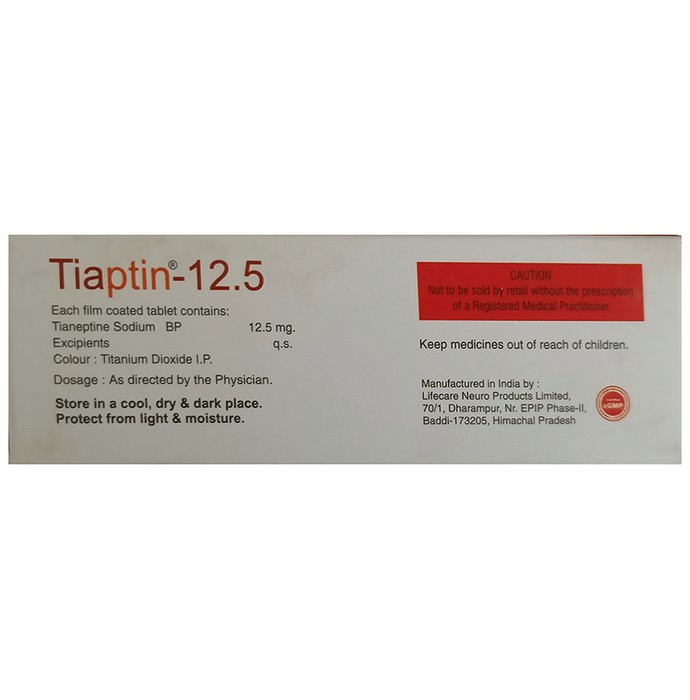
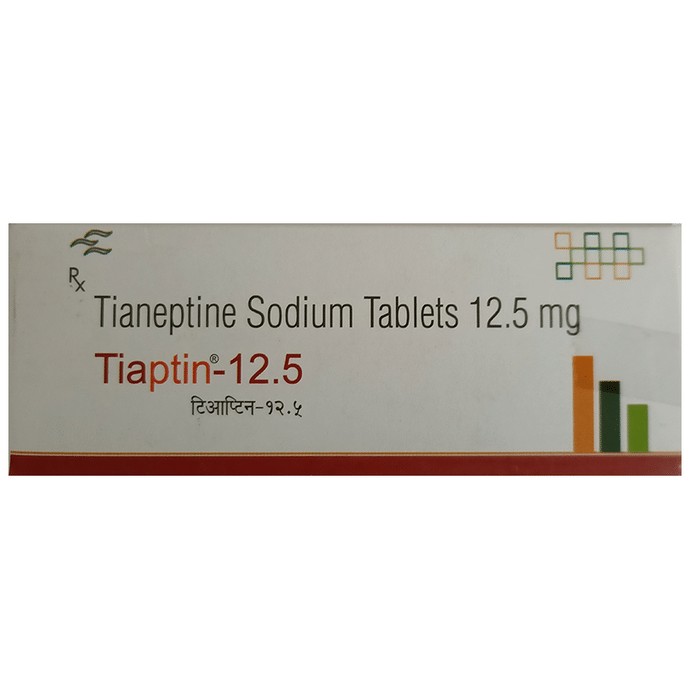
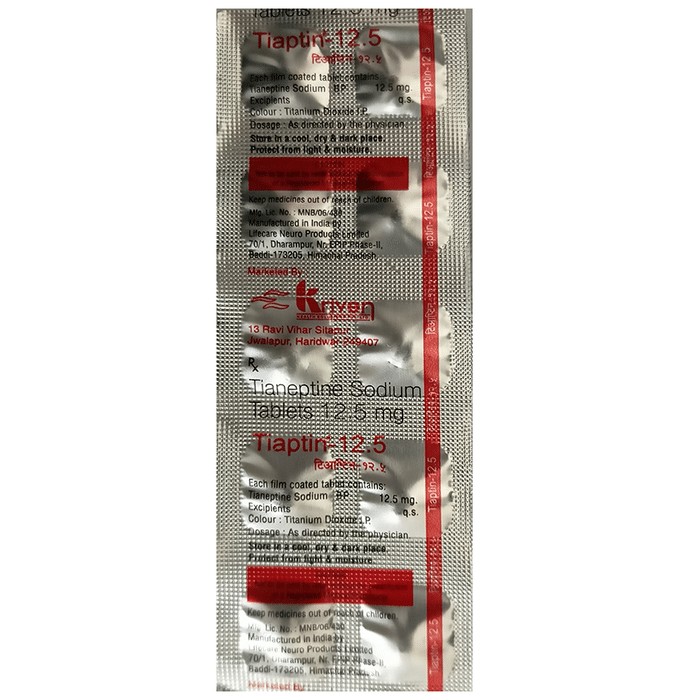
Tiaptin 12.5mg Tablet

Marketer
Kriven Health Solutions
Salt Composition
Tianeptine (12.5mg)
Overview Tiaptin 12.5mg Tablet
Dibenzozepine antidepressant tablets, Tiaptin 12.5mg, effectively manage depressive symptoms. This medication elevates brain neurotransmitter levels, promoting mood stabilization and improvement, particularly in treatment-resistant depression. Its sedative effects suggest bedtime administration. While food intake doesn't affect absorption, consistent daily dosing maximizes therapeutic benefit. Dosage and treatment duration are determined by your physician to optimize symptom control. Common, generally mild and transient, side effects include tachycardia, blurred vision, dry mouth, urinary retention, and constipation. Postural hypotension, dizziness, and somnolence may occur initially; avoid driving or tasks requiring alertness until the effects are known. Gradual positional changes minimize dizziness. Weight gain is a potential side effect. Your doctor can offer strategies to manage bothersome or persistent side effects. Serious adverse events are uncommon. Inform your doctor of all current medications before commencing Tiaptin 12.5mg. Pregnant or breastfeeding individuals should use this medication under strict medical supervision. While not addictive, abrupt cessation may trigger withdrawal symptoms. Report any abrupt mood shifts, suicidal ideation, or self-harm thoughts immediately. Strictly adhere to prescribed dosage; overdose constitutes a medical emergency. Alcohol consumption is contraindicated due to potential adverse interactions.
Uses of Tiaptin 12.5mg Tablet
Clinical depression
Major Benefits of Tiaptin 12.5mg Tablet:
Consume this medication precisely as prescribed by your physician, adhering to both the dosage and treatment length. Ingest the tablet whole; avoid chewing, crushing, or fracturing it. The Tiaptin 12.5mg Tablet should be administered on an empty stomach.
Common Side effects of Tiaptin 12.5mg Tablet:
- Increased heart rate
- Dryness in mouth
- Orthostatic hypotension (sudden lowering of blood pressure on standing)
- Difficulty in urination
- Weight gain
- Constipation
How to use Tiaptin 12.5mg Tablet:
Consume this medication precisely as prescribed by your physician, adhering to both the dosage and treatment schedule. Ingest the tablet whole; avoid chewing, crushing, or fracturing it. Administer Tiaptin 12.5mg Tablet on an empty stomach.
How Tiaptin 12.5mg Tablet works:
Tofranil 12.5mg tablets are a type of tricyclic antidepressant medication. They elevate brain neurotransmitter concentrations, thereby improving mood regulation and alleviating depressive symptoms.
SAFETY ADVICE
 AlcoholUNSAFE
Consuming alcohol alongside Tiaptin 12.5mg Tablet is not advised due to safety concerns.
 PregnancyCONSULT YOUR DOCTOR
The use of Tiaptin 12.5mg tablets during pregnancy may pose risks. While human data is scarce, animal research indicates potential harm to a developing fetus. A physician will assess the potential benefits against any risks prior to prescribing. Consult your doctor for guidance.
 Breast feedingCONSULT YOUR DOCTOR
Use of 12.5mg Tiaptin tablets while breastfeeding is likely inadvisable. Available human data indicates potential transfer to breast milk, posing a possible risk to the infant.
 DrivingUNSAFE
Driving ability may be impaired by side effects associated with Tiaptin 12.5mg tablets.
 KidneyCAUTION
Individuals with kidney impairment should use Tiaptin 12.5mg tablets cautiously; dosage modification may be necessary. Physician consultation is advised.
 LiverCONSULT YOUR DOCTOR
Data regarding Tiaptin 12.5mg Tablet use in individuals with hepatic impairment is scarce. Physician consultation is advised.
What if you forget to take Tiaptin 12.5mg Tablet :
Should you forget a Tiaptin 12.5mg Tablet dose, administer it immediately. Nevertheless, if your next scheduled dose is imminent, omit the missed dose and resume your usual dosing regimen. Avoid taking a double dose.
Facts to Know About Tiaptin 12.5mg Tablet
| Label | Value |
|---|---|
| Chemical Type | Medium-Chain Triglyceride |
| Developing Habits | No. |
| Treatment Category | Neuroscience of the Central Nervous System |
 3,018 People bought this recently