


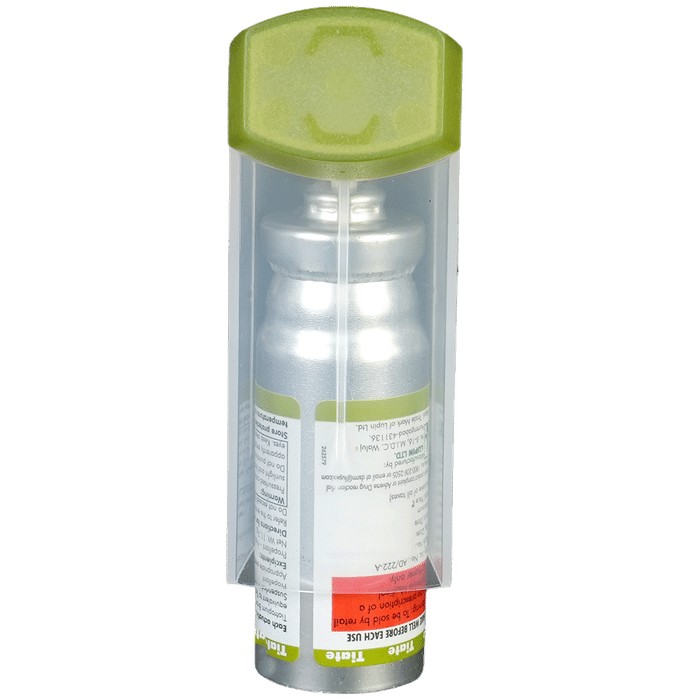
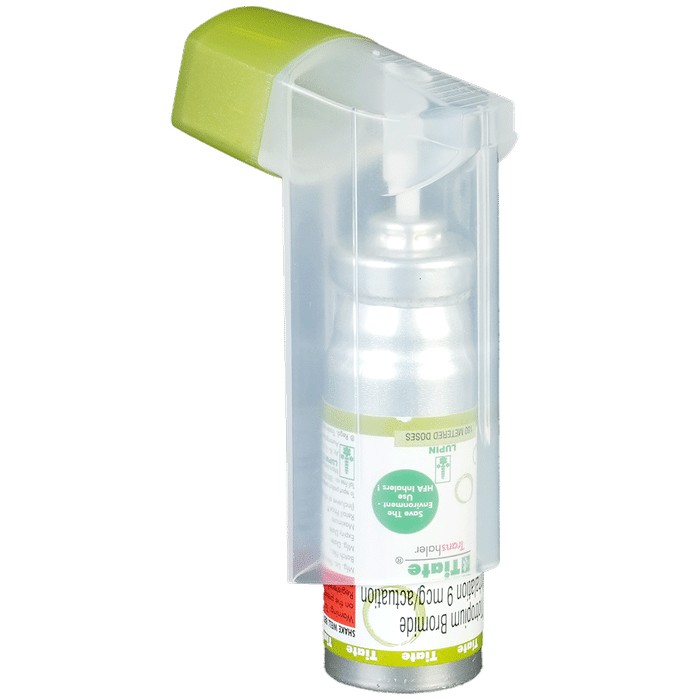
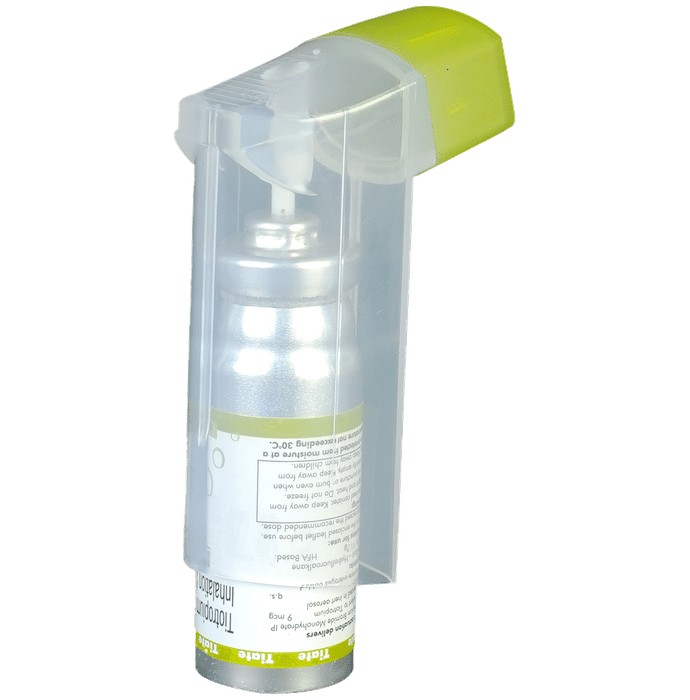
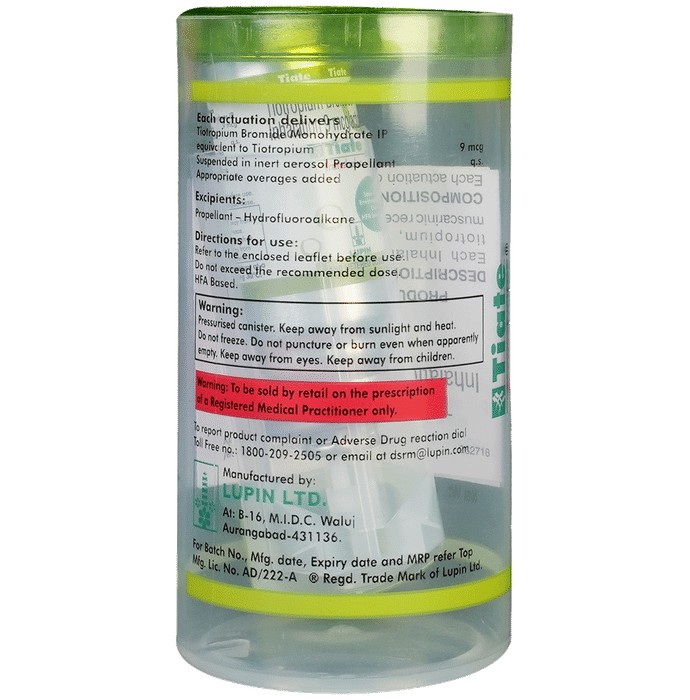
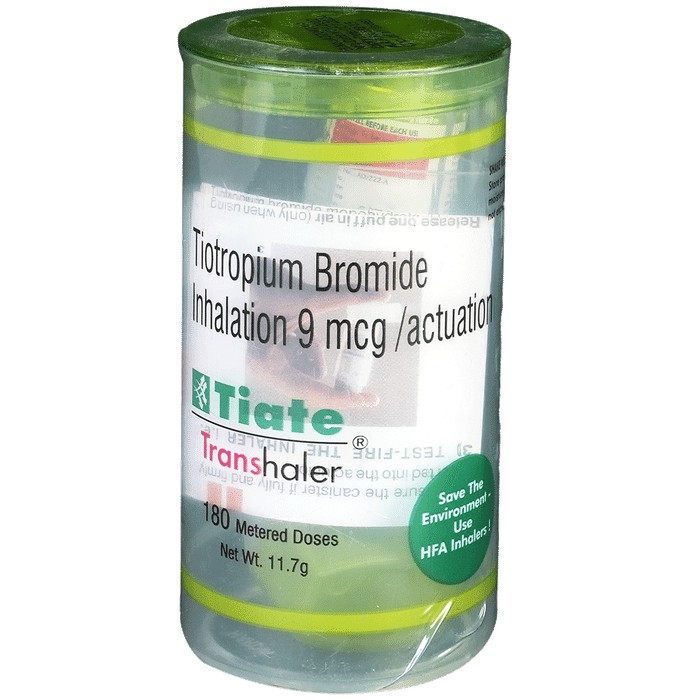
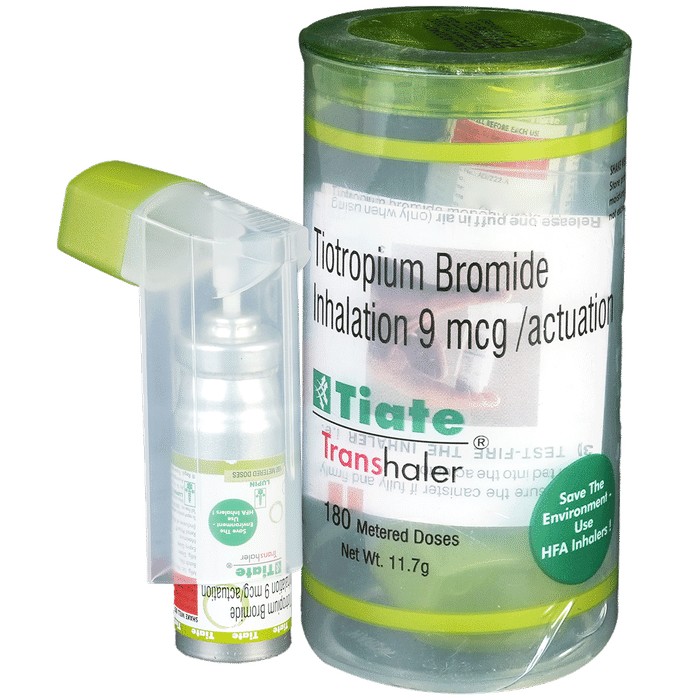
Tiate Transhaler

Marketer
Lupin Ltd
Salt Composition
Tiotropium (9mcg)
Overview Tiate Transhaler
Tiotropium Transhaler, an anticholinergic medication, treats chronic obstructive pulmonary disease (COPD) and asthma. By relaxing airway muscles, it eases breathing and alleviates symptoms like chest tightness, breathlessness, wheezing, and coughing. Administered solely via inhalation, the prescribed dosage and duration must be strictly followed. Initial use should occur under medical supervision to mitigate potential adverse reactions. Consistent daily timing enhances efficacy. Dosage frequency is determined by the condition being treated and adjusted by your physician to optimize symptom management. Continue use as directed; this medication does not address acute breathing difficulties or asthma attacks – always carry a rescue inhaler. Dry mouth is a frequent side effect; report any concerning symptoms to your doctor. Remedies include increased hydration, sugarless sweets, and diligent oral hygiene. Report all side effects. Inform your physician of any liver or kidney conditions, pregnancy, breastfeeding, or other medications you are currently taking, as interactions can affect the drug's efficacy or mechanism of action.
Uses of Tiate Transhaler
Managing chronic obstructive pulmonary disease (COPD)
Major Benefits of Tiate Transhaler:
Always consult the product label for proper usage instructions. Activate the inhaler by shaking it well. Depress the inhaler once while simultaneously beginning a slow, deep inhalation. Retain your breath for approximately 10 seconds. Continue this process until the prescribed number of inhalations, as determined by your physician, is complete. Finally, rinse your mouth completely with water and discard the rinse water.
Common Side effects of Tiate Transhaler:
- Dryness in mouth
How to use Tiate Transhaler:
Before using, carefully read the product instructions. Shake the inhaler well. Simultaneously, begin inhaling and depress the inhaler once to dispense the medicine. Retain your breath for ten seconds. Repeat this process until the prescribed number of inhalations is reached, as directed by your physician. Finally, rinse your mouth completely with water and discard the rinse water.
How Tiate Transhaler works:
Transhaler Tiate, an anticholinergic inhaler, eases breathing by relaxing airway muscles, thus widening the airways.
SAFETY ADVICE
 AlcoholUNSAFE
Alcohol and Tiate Transhaler should not be used together.
 PregnancyCONSULT YOUR DOCTOR
Using Tiate Transhaler during pregnancy may pose risks. While human data is scarce, animal research indicates potential harm to the unborn child. Your physician will assess the advantages against possible dangers prior to prescribing. Seek medical advice.
 Breast feedingCONSULT YOUR DOCTOR
Using Tiate Transhaler while breastfeeding is likely inadvisable. Available human data indicates potential transfer to breast milk, posing a risk to the infant. Observe the infant for symptoms such as dehydration, bowel irregularity, and urinary difficulties.
 DrivingNone
No known drug interactions.
 KidneyNone
No known drug interactions.
 LiverNone
No known drug interactions.
What if you forget to take Tiate Transhaler :
Should you forget a Tiate Transhaler dose, administer it at your earliest convenience. However, if your next scheduled dose is imminent, omit the missed dose and resume your usual dosing regimen. Avoid taking a double dose.
Facts to Know About Tiate Transhaler
| Label | Value |
|---|---|
| Chemical Category | Morpholinederivative |
| Developing Habits | No. |
| Treatment Category | Breathing |
 3,018 People bought this recently