


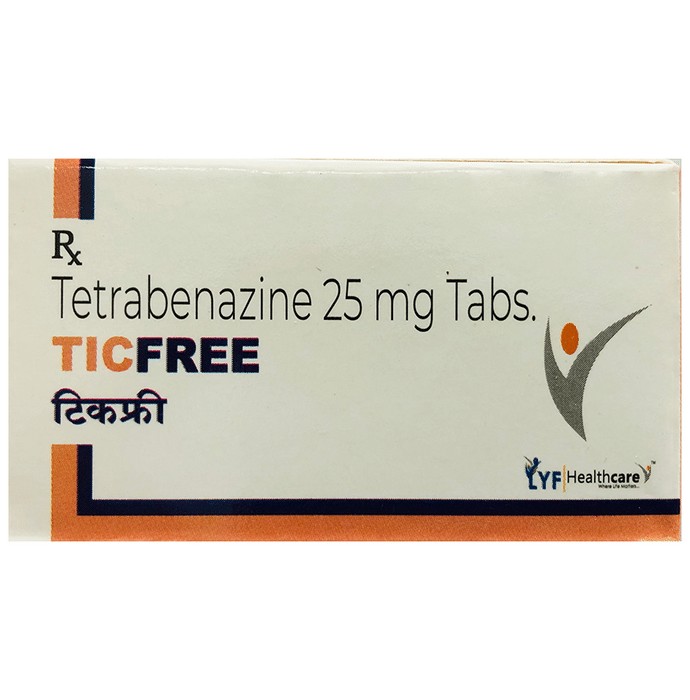
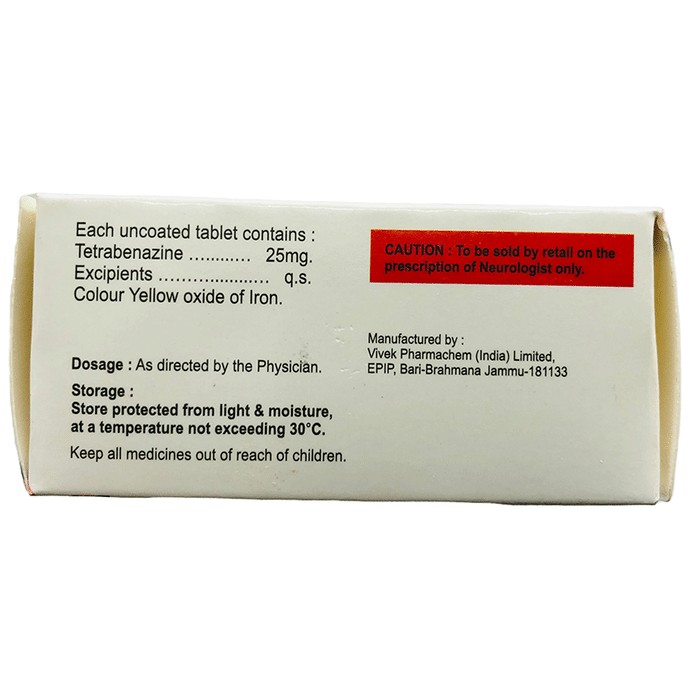
Ticfree Tablet

Marketer
Lyf Healthcare
Salt Composition
Tetrabenazine (25mg)
Overview Ticfree Tablet
Chorea, involuntary jerking movements associated with Huntington's disease, responds to treatment with ChoreaFree tablets. These tablets regulate dopamine levels, thereby lessening the severity of the movements and improving overall functionality. This enhanced control facilitates easier movement and improved daily living. ChoreaFree tablets may be taken with or without food, but consistent daily timing is recommended to maintain therapeutic blood levels. Always adhere to your physician's prescribed dosage and duration. If a dose is missed, take it as soon as possible. Sudden cessation of treatment is discouraged; consult your doctor before stopping. Immediately discontinue use and seek medical attention if neuroleptic malignant syndrome develops (symptoms: high fever, muscle stiffness, altered mental state, or convulsions). Common side effects can include nausea, sleep disturbances, anxiety, tiredness, akathisia (restlessness), and depression. Drowsiness and dizziness are also possible; avoid driving or activities requiring alertness until the medication's effects are understood. Report any unusual mood changes, new or worsening depression, or suicidal ideation to your doctor immediately.
Uses of Ticfree Tablet
Managing Huntington's disease-related involuntary movements (chorea).
Major Benefits of Ticfree Tablet:
Follow your doctor's instructions precisely regarding dosage and treatment length for Ticfree Tablets. Ingest the tablets whole; avoid chewing, crushing, or breaking them. Ticfree Tablets can be taken with or without food, although consistent timing is recommended.
Common Side effects of Ticfree Tablet:
- Nausea
- Insomnia (difficulty in sleeping)
- Anxiety
- Fatigue
- Sleepiness
- Akathisia (inability to stay still)
- Depression
How to use Ticfree Tablet:
Follow your doctor's instructions precisely regarding dosage and treatment length for this medication. Ingest the Ticfree Tablet whole; avoid chewing, crushing, or breaking it. While it can be taken with or without food, consistency in timing is recommended.
How Ticfree Tablet works:
Ticfree Tablets reduce levels of key neurotransmitters—including dopamine, serotonin, norepinephrine, and histamine—in the brain, thereby mitigating involuntary movements.
SAFETY ADVICE
 AlcoholUNSAFE
Concurrent use of Ticfree Tablet and alcohol may result in increased sleepiness.
 PregnancyCONSULT YOUR DOCTOR
The use of Ticfree Tablets during pregnancy may pose risks. While human data is scarce, animal research indicates potential harm to the unborn child. A physician will assess the potential advantages against any possible dangers prior to prescribing. Seek medical advice.
 Breast feedingCONSULT YOUR DOCTOR
The use of Ticfree Tablets while breastfeeding is likely inadvisable. Preliminary human data indicates potential transfer of the medication into breast milk, posing a possible risk to the infant.
 DrivingUNSAFE
Taking Ticfree Tablets might reduce alertness, impair vision, or cause drowsiness and dizziness. Refrain from driving if you experience these effects.
 KidneyCONSULT YOUR DOCTOR
Insufficient data exists regarding Ticfree Tablet use in individuals with renal impairment. A physician's consultation is recommended; careful consideration is warranted for such patients.
 LiverUNSAFE
Patients with liver conditions should not take Ticfree Tablet due to potential safety concerns. Medical advice is recommended.
What if you forget to take Ticfree Tablet :
Should you forget a Ticfree Tablet dose, ingest it immediately. Nevertheless, if your next dose is imminent, omit the missed one and resume your usual dosing regimen. Avoid taking a double dose.
Facts to Know About Ticfree Tablet
| Label | Value |
|---|---|
| Chemical Category | Isoquinoline Tetrahydro Derivative |
| Developing Habits | No. |
| Type of Therapy | Neuroscience of the Central Nervous System |
| Action Class | Tetrabenazine: A Monoamine Depleting Agent |
 3,018 People bought this recently