


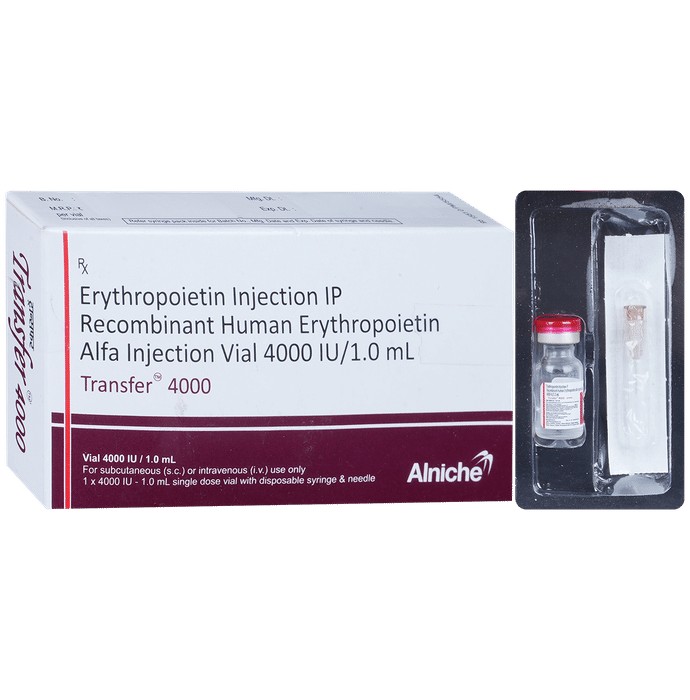
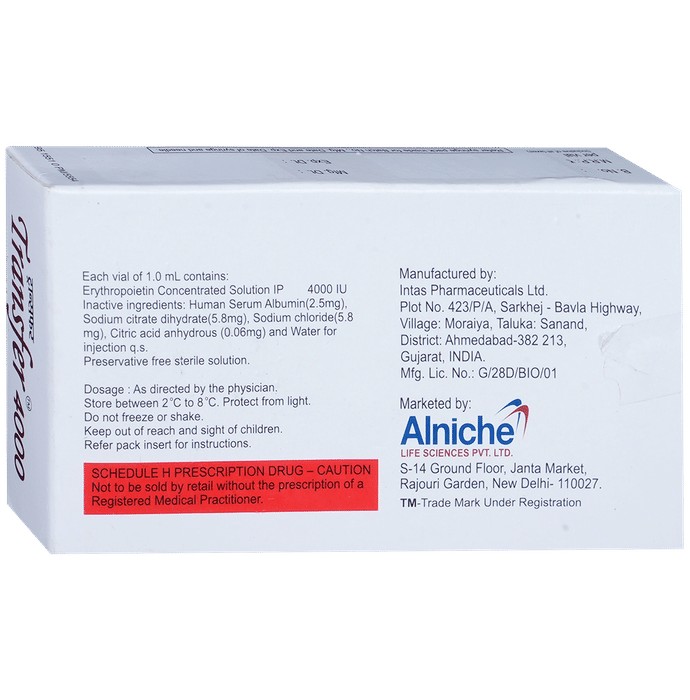
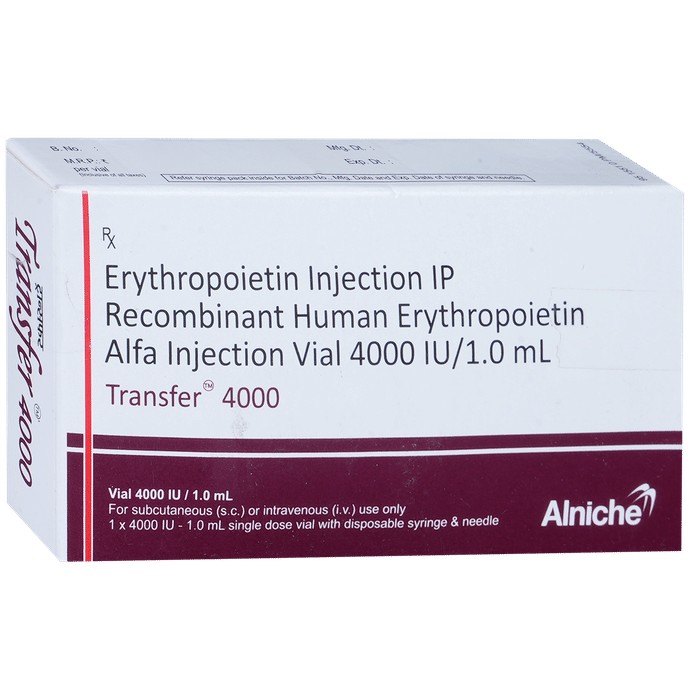
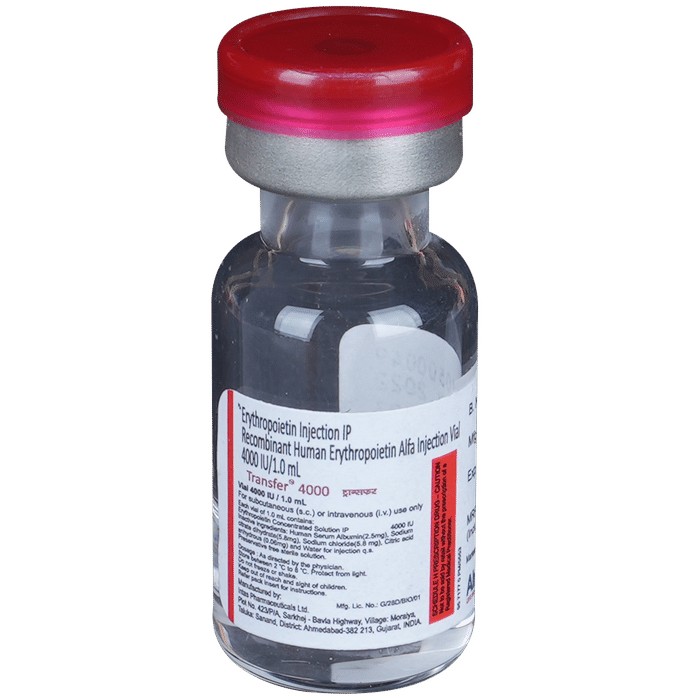
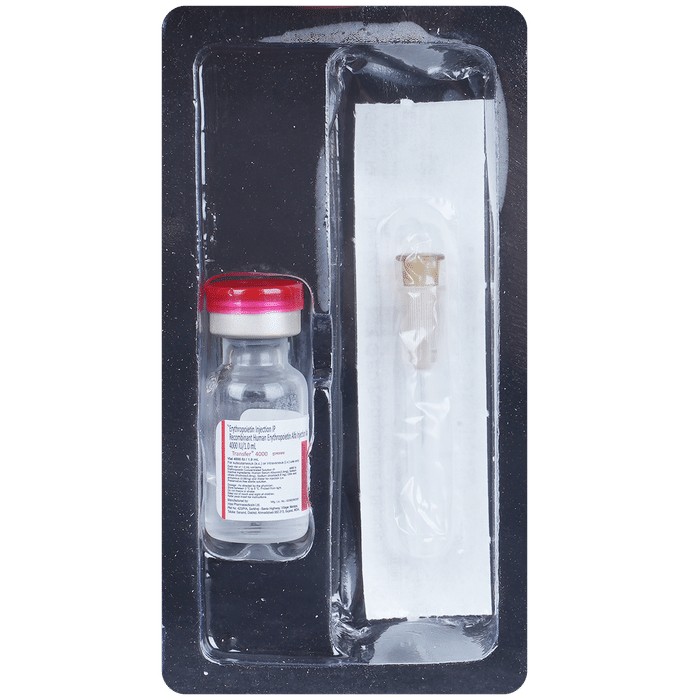
Transfer 4000 Injection

Marketer
Alniche Life Sciences Pvt Ltd
Salt Composition
Recombinant Human Erythropoietin Alfa (4000IU/ml)
Overview Transfer 4000 Injection
Erythropoiesis-stimulating agent, Transfer 4000 Injection, boosts red blood cell production within the bone marrow. Its primary application is in treating anemia stemming from chronic kidney disease. It's also indicated for anemia related to cancer chemotherapy and antiretroviral therapy for HIV. Administration is via subcutaneous or intravenous injection, as determined by your physician; typically administered by a healthcare professional. Dosage is weight-based and tailored to the underlying cause of the anemia. Concurrent iron supplementation, both pre- and during treatment, can enhance efficacy. Store Transfer 4000 Injection under refrigeration, but allow it to reach room temperature before use. Common adverse reactions include nausea, vomiting, pyrexia, and hypertension. Influenza-like symptoms (headache, fatigue, vertigo, myalgia) may also occur, often subsiding after initial treatment. Persistent side effects warrant consultation with your doctor for management strategies. Report serious side effects immediately, particularly seizures. Serious thromboembolic events requiring immediate medical attention are a potential risk. Prior to commencing treatment, disclose any history of uncontrolled hypertension, cardiac disease, or gout. Complete disclosure of all concomitant medications is crucial. Regular blood pressure monitoring is essential throughout treatment. Supplementary monitoring may be required to assess for potential adverse effects. The safety profile in pregnancy is currently undetermined; inform your doctor if pregnant, planning pregnancy, or breastfeeding.
Uses of Transfer 4000 Injection
Managing anemia resulting from cancer treatment and chronic kidney disease.
Major Benefits of Transfer 4000 Injection:
This medication will be administered by your healthcare provider; self-medication is strictly prohibited.
Common Side effects of Transfer 4000 Injection:
- High blood pressure
- Nausea
- Vomiting
- Fever
- Rash
- Joint pain
- Headache
- Insomnia (difficulty in sleeping)
- Chills
- Cough
- Bone pain
- Muscle spasm
- Dizziness
- Vascular occlusion
- Injection site irritation
- Stomatitis (Inflammation of the mouth)
- Weight loss
- Decreased white blood cell count (lymphocytes)
- Increased glucose level in blood
- Blood clot in the blood vessels
How to use Transfer 4000 Injection:
This medication will be administered by your healthcare provider. Self-medication is strictly prohibited.
How Transfer 4000 Injection works:
Transfer 4000 Injection is an erythropoietin-based medication that boosts red blood cell production. It achieves this by prompting increased red blood cell synthesis within the bone marrow, the blood cell-generating tissue residing inside bones.
SAFETY ADVICE
 AlcoholCONSULT YOUR DOCTOR
Alcohol consumption alongside Transfer 4000 Injection may pose unknown risks. Seek medical advice before combining them.
 PregnancyCONSULT YOUR DOCTOR
Administering Transfer 4000 Injection during pregnancy may pose risks. While human research is scarce, animal studies indicate potential harm to the fetus. A physician will assess the advantages against possible risks prior to prescribing. Seek medical advice.
 Breast feedingCONSULT YOUR DOCTOR
Administering 4000 Injection while breastfeeding carries a likely risk. Available human data indicates potential transfer to breast milk, posing a possible threat to the infant.
 DrivingUNSAFE
Administering 4000 Injection may result in adverse reactions that could impair driving ability.
 KidneySAFE IF PRESCRIBED
Transfer 4000 Injection can be administered to patients with renal impairment without altering the dosage. However, routine monitoring of kidney function is recommended during treatment.
 LiverCAUTION
Administering Transfer 4000 Injection requires careful consideration in individuals with hepatic impairment. Dosage modification of Transfer 4000 Injection might be necessary. Physician consultation is advised.
What if you forget to take Transfer 4000 Injection :
Omit a Transfer 4000 Injection dose? Seek your physician's advice.
Facts to Know About Transfer 4000 Injection
| Label | Value |
|---|---|
| Chemical Type | Amino Acid and Peptide Analogs |
| Developing Habits | No. |
| Treatment Category | KINSHIP |
 3,018 People bought this recently