


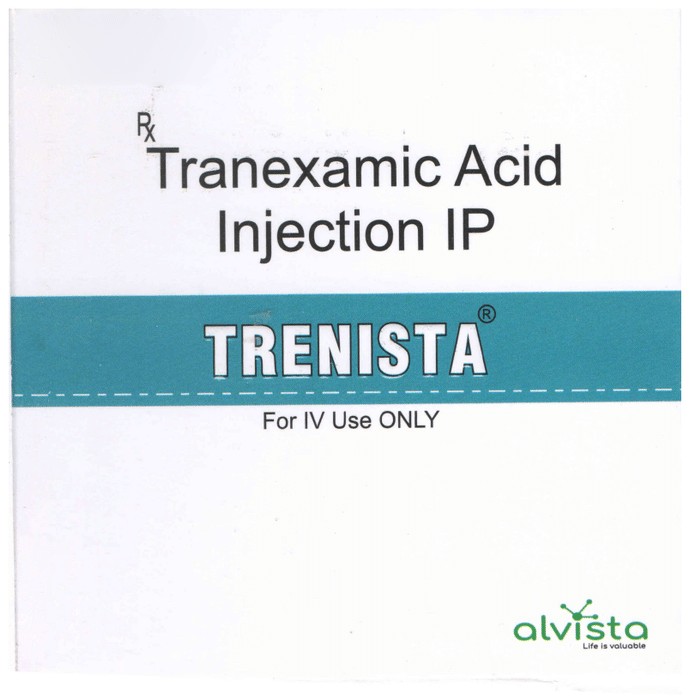
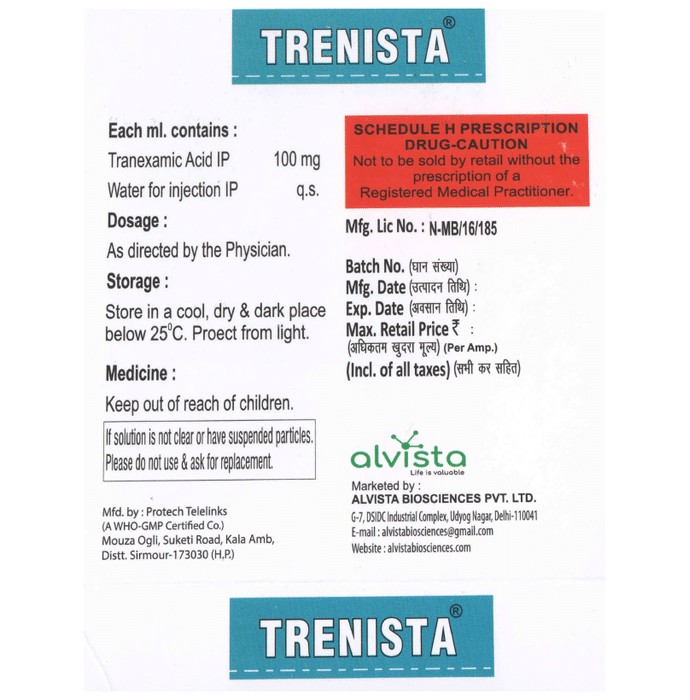
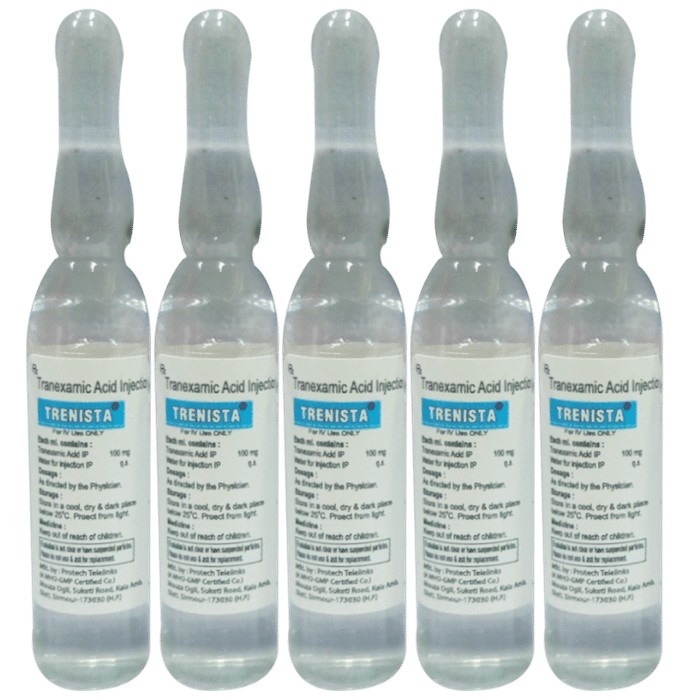
Trenista Injection

Marketer
Alvista Biosciences Pvt Ltd
Salt Composition
Tranexamic Acid (100mg/ml)
Overview Trenista Injection
Hemostatic treatment with Trenista Injection effectively manages bleeding episodes. Its application encompasses various scenarios including dental extractions, menorrhagia, abnormal uterine bleeding, epistaxis, and surgical procedures involving the oral cavity, prostate, or bladder. Trenista Injection functions as an antifibrinolytic agent, stabilizing blood clots and thereby controlling hemorrhage. Administration requires qualified medical oversight. Patients with pre-existing allergies to the injection should avoid its use. Commonly reported adverse effects include localized injection site reactions, fatigue, musculoskeletal discomfort, and nasal stuffiness. Prior cardiac surgery or renal impairment necessitates physician consultation before use. The injection is deemed safe for pregnant and lactating individuals, as well as those with hepatic disorders.
Uses of Trenista Injection
Managing Hemorrhage
Major Benefits of Trenista Injection:
This medication will be administered by your physician or registered nurse; self-medication is strictly prohibited.
Common Side effects of Trenista Injection:
- Joint pain
- Headache
- Back pain
- Vomiting
- Nausea
- Abdominal pain
- Diarrhea
- Muscle cramp
- Anemia (low number of red blood cells)
- Lightheadedness
How to use Trenista Injection:
Administering this medication will be handled by your healthcare provider. Self-medication is strictly prohibited.
How Trenista Injection works:
Trenista Injection is a medication that inhibits fibrinolysis. Its mechanism of action involves blocking the dissolution of blood clots, thus managing heavy menstrual bleeding or post-surgical hemorrhage.
SAFETY ADVICE
 AlcoholUNSAFE
Concurrent use of Trenista Injection and alcohol can lead to significant somnolence.
 PregnancyCONSULT YOUR DOCTOR
Data on Trenista Injection use in pregnancy is lacking. Seek medical advice from your physician.
 Breast feedingCONSULT YOUR DOCTOR
Administration of Trenista Injection while breastfeeding is likely inadvisable. Preliminary human studies indicate potential transfer of the medication into breast milk, posing a possible risk to the infant.
 DrivingCONSULT YOUR DOCTOR
The effect of Trenista Injection on driving ability is unknown. Refrain from driving if you experience symptoms impairing concentration or reaction time.
 KidneyCAUTION
Caution is advised when administering Trenista Injection to individuals with impaired renal function. Dosage modification for Trenista Injection may be necessary. Physician consultation is recommended.
 LiverSAFE IF PRESCRIBED
The use of Trenista Injection in individuals with hepatic impairment is likely safe. Preliminary evidence indicates dose modification may be unnecessary for this population. Physician consultation is recommended.
What if you forget to take Trenista Injection :
Omit a dose of Trenista Injection? Seek your physician's advice.
Facts to Know About Trenista Injection
| Label | Value |
|---|---|
| Chemical Type | Amino Acid and Peptide Analogs |
| Developing Habits | No. |
| Treatment Category | KINSHIP |
 3,018 People bought this recently