


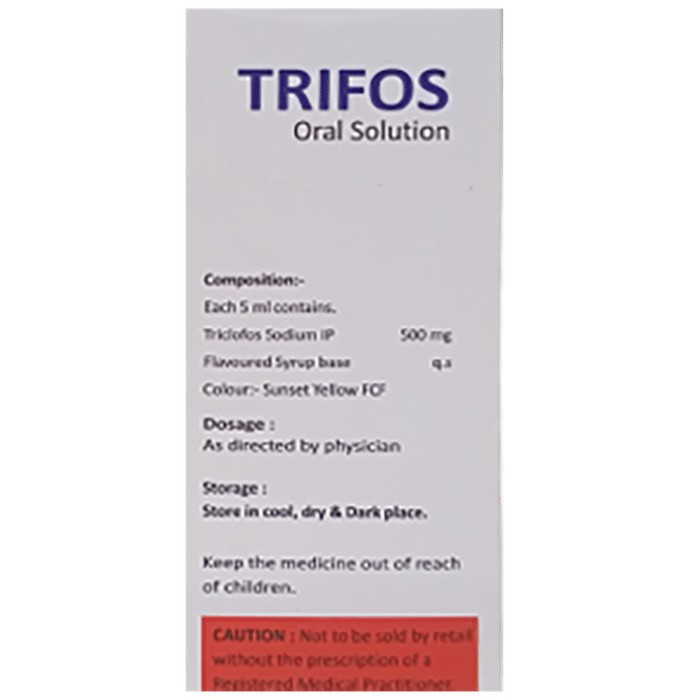
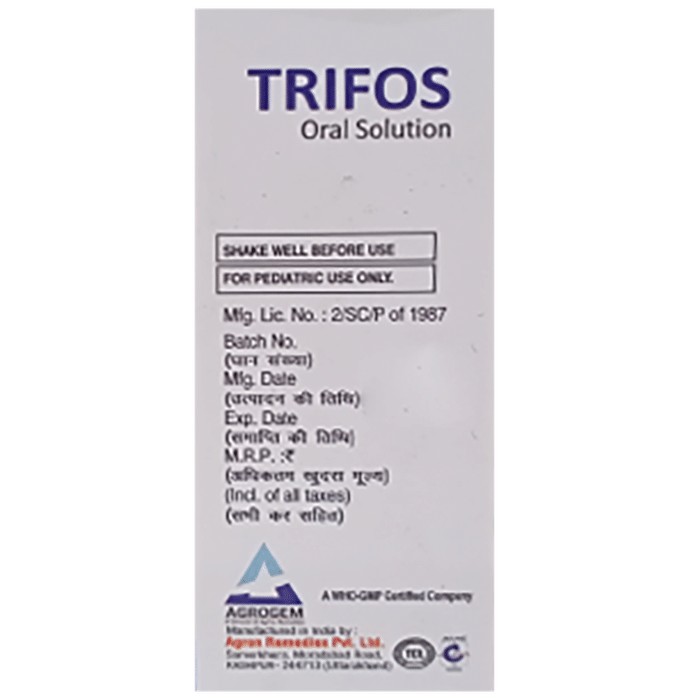

Trifos Oral Solution

Marketer
Agron Remedies Pvt Ltd
Salt Composition
Triclofos (500mg/5ml)
Overview Trifos Oral Solution
Pedatric patients may receive Trifos Oral Solution for short-term management of sleep disorders like insomnia. It can also alleviate pre-procedure anxiety and pain by inducing sleep. Administer Trifos Oral Solution orally to your child, ideally before bedtime, with or without food as directed by their physician. Dosage is determined by your child's condition and response to treatment. Due to its extended duration of action, drowsiness may persist into the following day. Some children might experience nausea or discomfort after taking it. If vomiting occurs within 30 minutes, re-administer the dose after your child has settled, but avoid doubling the prescribed amount. Consult your pediatrician if sleep remains problematic after the initial dose, or if your child awakens during the night or early morning. Avoid using Trifos Oral Solution for routine sedation. Its use is primarily indicated for pre-procedural sedation. This medication is intended for short-term use; prolonged or high-dose administration may lead to dependence or tolerance, necessitating increased dosages for efficacy. Do not discontinue Trifos Oral Solution abruptly, even with improvement, as withdrawal symptoms may occur. Minor, transient side effects, such as nausea, vomiting, drowsiness, and coordination difficulties, may arise in some children, usually resolving with continued use. Persistent or troublesome side effects warrant immediate medical attention. Fully inform your child's doctor of their complete medical history, including allergies, cardiac issues, liver or kidney dysfunction, to ensure appropriate treatment planning.
Uses of Trifos Oral Solution
Managing Sleeplessness: Use as a Sleep Aid
Major Benefits of Trifos Oral Solution:
Administer this medication precisely as your physician directs, adhering to both the prescribed dosage and duration. Consult the product label for complete instructions prior to consumption. Use a measuring device for accurate dosing and ingest orally. Ensure thorough shaking before each use. Trifos Oral Solution can be consumed with or without food; however, consistent daily timing is recommended.
Common Side effects of Trifos Oral Solution:
- Impaired coordination
- Nausea
- Vomiting
- Drowsiness
How to use Trifos Oral Solution:
Administer this medication precisely as your physician directs, adhering to both the prescribed dosage and duration. Always consult the product label for usage instructions prior to consumption. Use a measuring device for accurate dosing and ingest orally. Ensure thorough shaking before each use. Trifos Oral Solution can be consumed with or without food; however, consistent timing is recommended for optimal results.
How Trifos Oral Solution works:
Trifos Oral Solution is a sleep aid. Metabolic processes transform it into an active metabolite which acts within the brain to promote drowsiness. This results in quicker sleep onset and prolonged sleep periods.
SAFETY ADVICE
 KidneyCAUTION
Exercise caution when administering Trifos Oral Solution to individuals with impaired kidney function. Dosage modifications for Trifos Oral Solution may be necessary. Physician consultation is recommended. Always discuss the use of Trifos Oral Solution with your pediatrician before giving it to your child.
 LiverCAUTION
Patients with liver conditions should use Trifos Oral Solution judiciously; dosage modification may be necessary. Physician consultation is advised. Always discuss Trifos Oral Solution use with your pediatrician before administering it to a child.
What if you forget to take Trifos Oral Solution :
Remain calm. At bedtime, administer Trifos Oral Solution as soon as possible if a dose is missed. Avoid giving Trifos Oral Solution outside of bedtime, as it may cause drowsiness, dizziness, and disorientation. If unsure, seek advice from your pediatrician.
Facts to Know About Trifos Oral Solution
| Label | Value |
|---|---|
| Chemical Type | Alkyl Monophosphates |
| Developing Habits | No. |
| Type of Therapy | Neuroscience |
 3,018 People bought this recently