


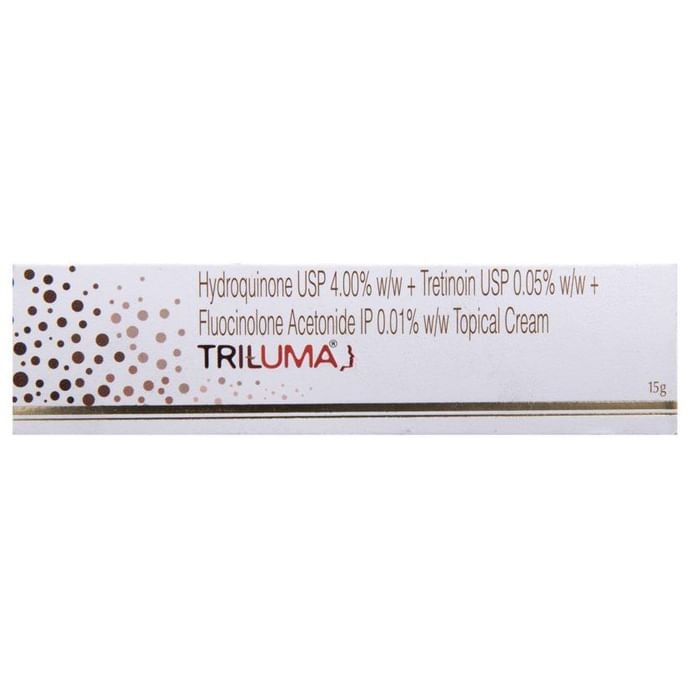
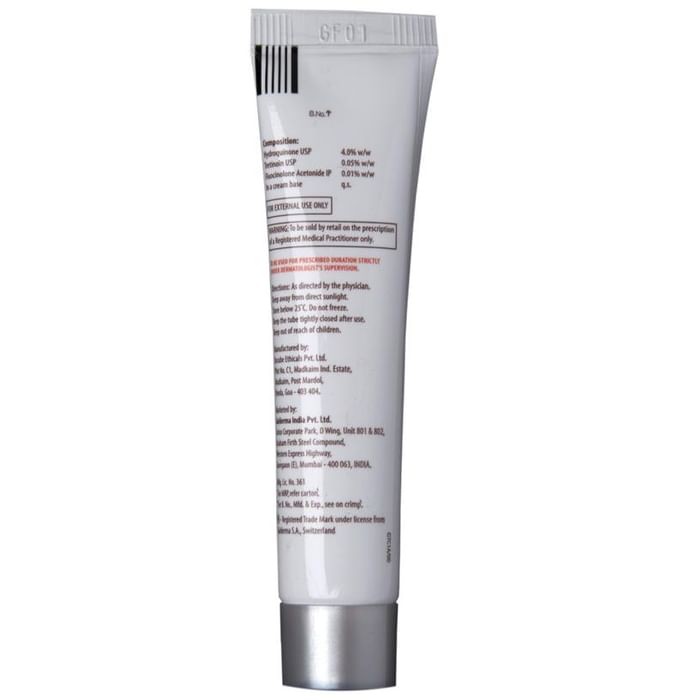
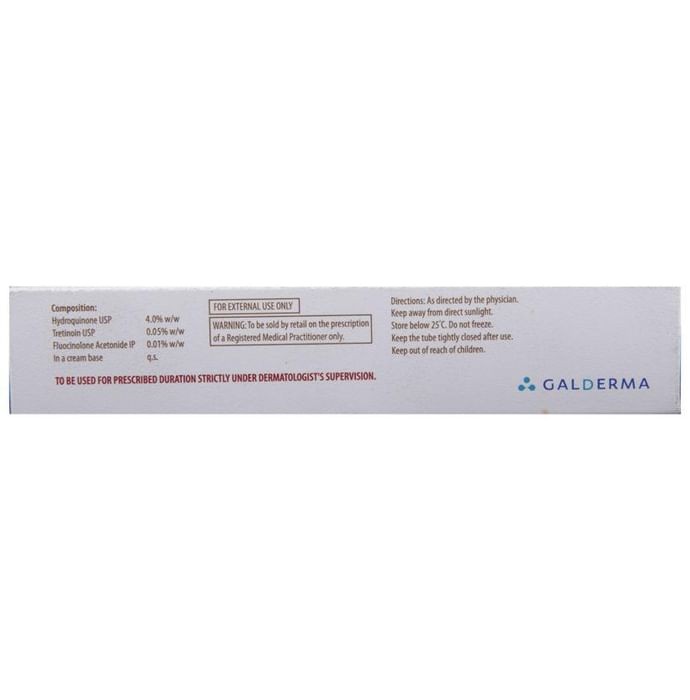
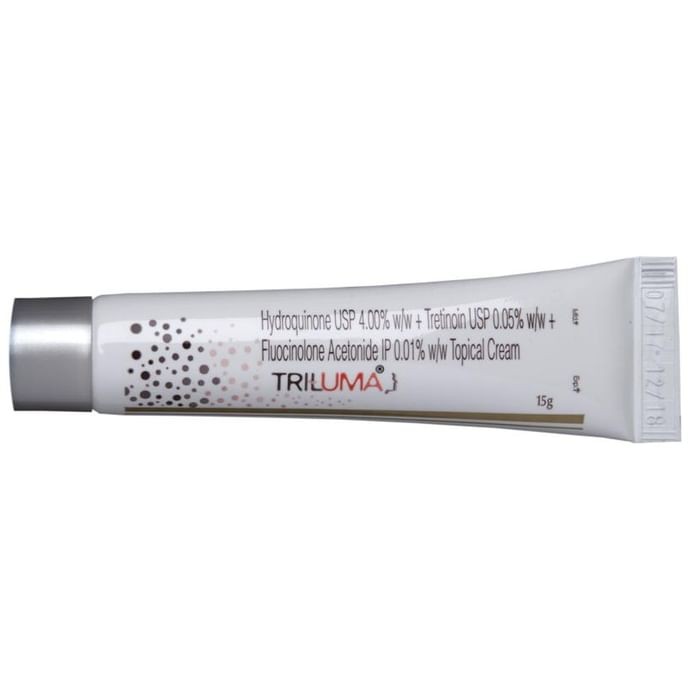
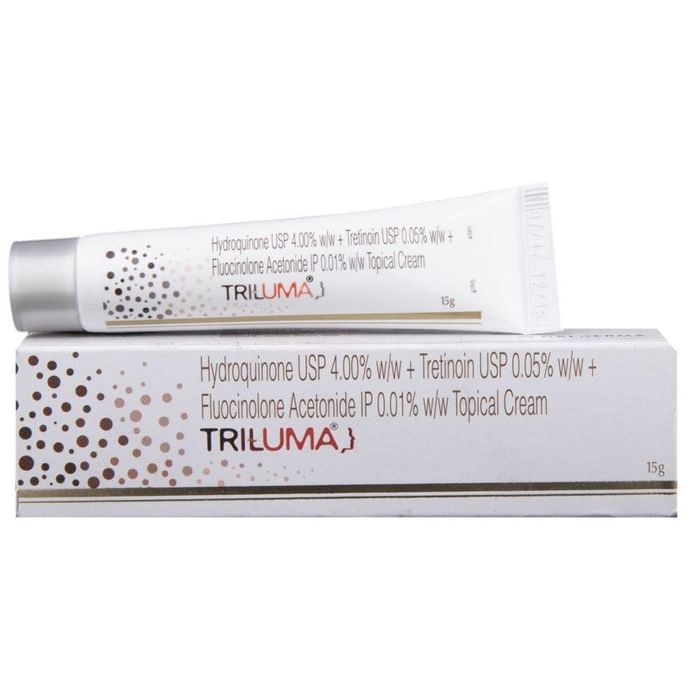
Triluma Cream

Marketer
Galderma India Pvt Ltd
Salt Composition
Hydroquinone (4% w/w) + Tretinoin (0.05% w/w) + Fluocinolone acetonide (0.01% w/w)
Overview Triluma Cream
Melasma is effectively treated with Triluma Cream, a prescription topical medication combining several active ingredients. This cream accelerates skin cell turnover, alleviating redness, swelling, and itching. Always adhere to your doctor's prescribed dosage and duration. Wash hands before application; review the product label for instructions. For external use only. Avoid exceeding the recommended dose. Report any known allergies to this medication to your physician. Common side effects at the application site include burning, irritation, itching, and redness. Persistent or concerning side effects warrant immediate medical consultation. Disclose pregnancy or any other health conditions to your doctor before use. This cream is contraindicated for breastfeeding mothers.
Uses of Triluma Cream
Hyperpigmentation of the face
Major Benefits of Triluma Cream:
Apply this medication solely to the skin's surface. Follow your physician's instructions precisely regarding dosage and treatment length. Always consult the product label for application details. Ensure the affected area is clean and dry before applying the cream. Wash your hands thoroughly afterward, except when the affected area is on your hands.
Common Side effects of Triluma Cream:
- Erythema (skin redness)
- Skin peeling
- Burning sensation
- Dryness
- Itching
How to use Triluma Cream:
Apply this medication solely to the skin's surface. Follow your physician's instructions precisely regarding dosage and treatment length. Always consult the product label for application guidelines. Ensure the affected area is clean and dry before applying the cream. Wash your hands thoroughly afterward, except when the hands themselves require treatment.
How Triluma Cream works:
Triluma Cream combines hydroquinone, tretinoin, and fluocinolone acetonide to effectively manage melasma, characterized by skin discoloration. Hydroquinone lightens skin by diminishing melanin, the pigment responsible for skin darkening. Tretinoin, a retinoid (vitamin A derivative), accelerates skin cell turnover. Fluocinolone acetonide, a corticosteroid, suppresses inflammatory prostaglandins, thus reducing redness, swelling, and itching.
SAFETY ADVICE
 AlcoholNone
No known drug interactions.
 PregnancyCONSULT YOUR DOCTOR
The use of Triluma Cream during pregnancy may pose risks. While human research is scarce, animal studies indicate potential harm to a developing fetus. A physician will assess the potential advantages against any possible risks prior to prescribing. Seek medical advice.
 Breast feedingUNSAFE
Triluma Cream should not be used while breastfeeding due to the potential for infant toxicity. Studies indicate a risk of harm to the nursing infant.
 DrivingNone
No drug interactions identified.
 KidneyNone
No drug interactions identified.
 LiverNone
No drug interactions identified.
What if you forget to take Triluma Cream :
Should you forget a Triluma Cream application, apply it promptly. However, if your next scheduled application is imminent, omit the missed dose and resume your usual regimen. Avoid applying a double dose.
Facts to Know About Triluma Cream
| Label | Value |
|---|---|
| Developing Habits | No. |
| Treatment Category | DERMA |
 3,018 People bought this recently