



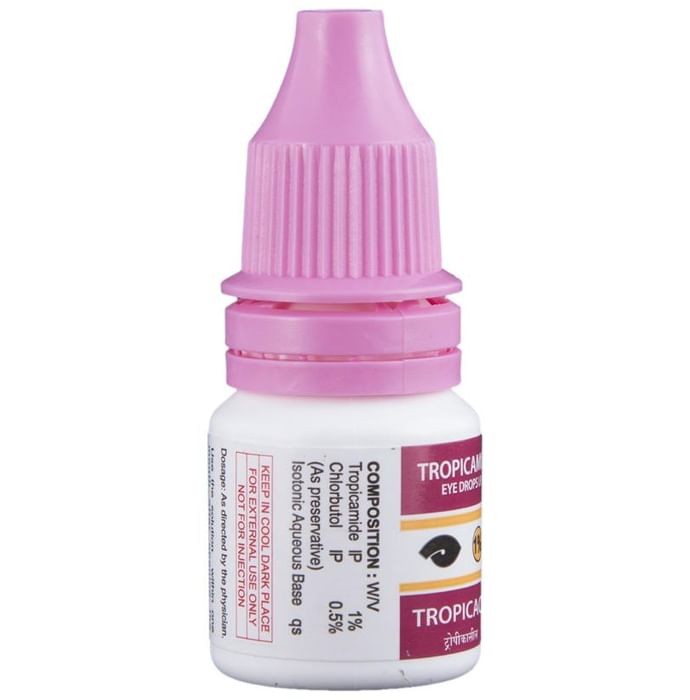



Tropicacyl Eye Drop

Marketer
Sunways India Pvt Ltd
Salt Composition
Tropicamide (1% w/v)
Overview Tropicacyl Eye Drop
Tropicamide ophthalmic solution is employed pre-examination and in the management of uveitis. Its mechanism involves pupil dilation, facilitating improved visualization during ophthalmic assessments. Post-cataract surgery, it mitigates redness and swelling. This medication is for topical ocular use only; adhere strictly to the prescribed dosage and regimen. Prevent contamination by avoiding contact between the dropper tip and any surface. Transient stinging, blurred vision, and xerostomia are potential side effects; these typically abate spontaneously. Persistent symptoms warrant medical consultation. Post-administration driving is discouraged due to potential visual impairment.
Uses of Tropicacyl Eye Drop
Ophthalmological assessment; inflammation of the uvea.
Major Benefits of Tropicacyl Eye Drop:
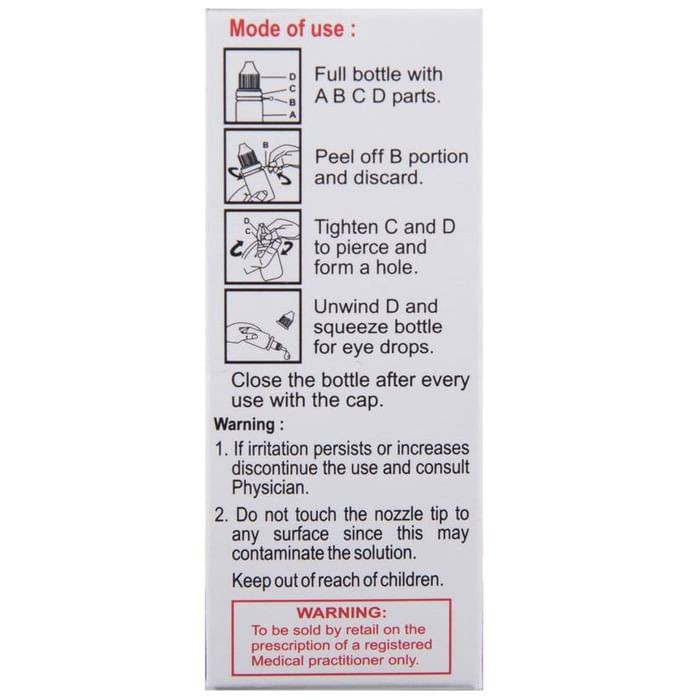
Apply this medication externally only. Administer as directed by your physician, adhering to the prescribed dosage and treatment schedule. Consult the product label for complete instructions prior to application. Position the dropper near the eye, avoiding contact, then gently compress to instill the medication into the lower conjunctival sac. Remove any excess solution.
Common Side effects of Tropicacyl Eye Drop:
- Stinging in the eyes
- Blurred vision
- Dryness in mouth
How to use Tropicacyl Eye Drop:
Apply this medication externally only. Administer as directed by your physician, following the prescribed dosage and schedule. Always consult the product label for instructions prior to application. Position the dropper near the eye, avoiding contact, then gently compress to instill the medication into the lower conjunctival sac. Remove any excess solution.
How Tropicacyl Eye Drop works:
Tropicacyl ophthalmic solution facilitates pupil dilation, enabling ophthalmologic examination of the fundus. It may also provide analgesia for specific ocular pathologies.
SAFETY ADVICE
 AlcoholNone
No known drug interactions.
 PregnancyCONSULT YOUR DOCTOR
Using Tropicacyl Eye Drops during pregnancy may pose risks. While human research is scarce, animal studies indicate potential harm to the unborn child. A physician will assess the advantages against possible risks prior to prescribing. Seek medical advice.
 Breast feedingSAFE IF PRESCRIBED
Using Tropicacyl Eye Drops while breastfeeding is likely safe. Available human data indicates minimal risk to the infant. To minimize Tropicacyl transfer to breast milk, apply pressure to the inner corner of the eye for at least one minute, subsequently blotting away any residual drops.
 DrivingUNSAFE
Tropicacyl Eye Drops can induce side effects that may impair driving ability. Post-administration, sensitivity to bright light, like sunlight, can persist for several hours in some individuals, potentially affecting their capacity to drive safely.
 KidneyNone
No known drug interactions.
 LiverNone
No known drug interactions.
What if you forget to take Tropicacyl Eye Drop :
Should you forget a dose of Tropicacyl Eye Drops, administer it at your earliest convenience. Nevertheless, if your next scheduled dose is imminent, omit the missed dose and resume your usual dosing regimen. Avoid taking a double dose.
Facts to Know About Tropicacyl Eye Drop
| Label | Value |
|---|---|
| Chemical Category | Phenylacetamide Derivative |
| Developing Habits | No. |
| Treatment Category | Ophthalmology |
| Behavioral Class | Mydriatic and cycloplegic anticholinergics |
 3,018 People bought this recently