


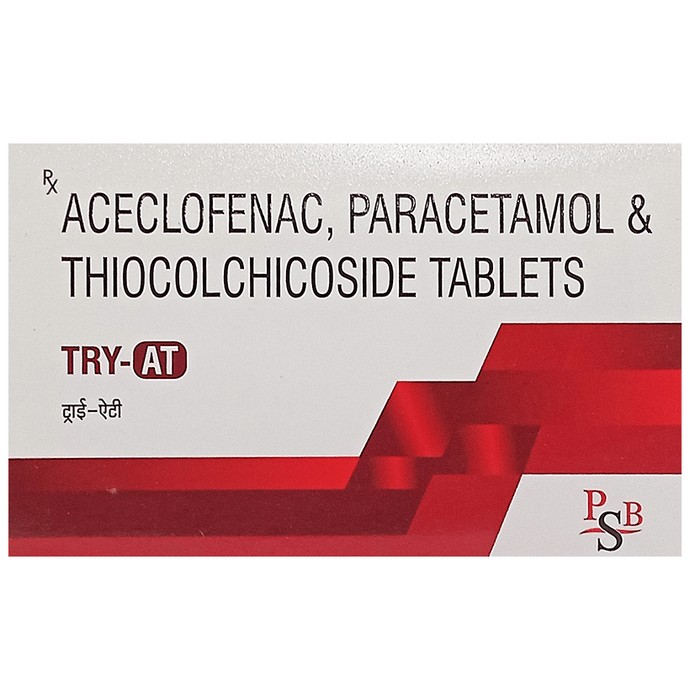
Try-AT Tablet

Marketer
Pure Science Biotech
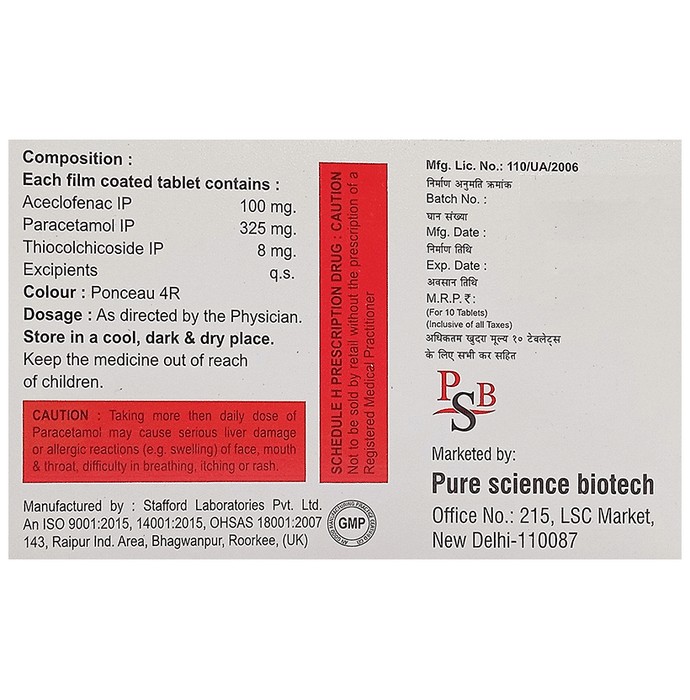
Salt Composition
Thiocolchicoside (8mg) + Aceclofenac (100mg) + Paracetamol (325mg)
Overview Try-AT Tablet
AT-Relief tablets combine medications to alleviate muscle pain. Their mechanism involves inhibiting the production of pain-inducing, inflammation-causing, and fever-inducing chemical signals. This enhances muscle mobility and provides pain relief. AT-Relief should be taken with food to minimize stomach upset. Dosage and treatment length vary depending on the condition's severity. Continue taking the medication as prescribed, even with improvement, until your doctor advises discontinuation. Common side effects include nausea, vomiting, indigestion, abdominal pain, diarrhea, appetite loss, and dry mouth. Report persistent or worsening side effects to your physician; they may offer strategies to manage them. Use the lowest effective dose. Inform your doctor of any pre-existing health issues or medications you're using, particularly liver or kidney problems, before starting treatment. Alcohol should be avoided during therapy. Pregnant or breastfeeding individuals must consult their doctor prior to use.
Uses of Try-AT Tablet
Managing muscle aches
Major Benefits of Try-AT Tablet:
Administer this medication precisely as your physician directs, adhering to both the prescribed dosage and treatment length. Ingest the Try-AT Tablet whole; avoid chewing, crushing, or fracturing it. Consumption should coincide with a meal.
Common Side effects of Try-AT Tablet:
- Nausea
- Vomiting
- Heartburn
- Stomach pain
- Diarrhea
- Loss of appetite
- Dryness in mouth
How to use Try-AT Tablet:
Follow your doctor's instructions precisely regarding dosage and treatment length for Try-AT Tablets. Ingest the tablets whole; do not chew, crush, or fracture them. Administer Try-AT with food.
How Try-AT Tablet works:
Try-AT Tablets combine the muscle relaxant thiocolchicoside with the analgesics aceclofenac and paracetamol. Thiocolchicoside eases muscle stiffness and spasms by acting on the central nervous system, promoting improved mobility. Aceclofenac and paracetamol reduce pain and inflammation by inhibiting the production of pain-signaling molecules in the body.
SAFETY ADVICE
 AlcoholCONSULT YOUR DOCTOR
Alcohol consumption alongside Try-AT Tablet hasn't been established as safe. Seek medical advice before combining them.
 PregnancyCONSULT YOUR DOCTOR
Data on Try-AT Tablet use in pregnancy is lacking. Seek medical advice from your physician.
 Breast feedingCONSULT YOUR DOCTOR
Data on Try-AT Tablet use while breastfeeding is absent. Seek medical advice from your physician.
 DrivingCONSULT YOUR DOCTOR
The effect of Try-AT Tablet on driving ability is undetermined. Refrain from operating a vehicle if experiencing symptoms impairing concentration or reaction time.
 KidneyCONSULT YOUR DOCTOR
Data regarding Try-AT Tablet use in patients with renal impairment is scarce. Physician consultation is advised.
 LiverCONSULT YOUR DOCTOR
Data regarding Try-AT Tablet use in individuals with hepatic impairment is scarce. Physician consultation is advised.
What if you forget to take Try-AT Tablet :
Should you forget a Try-AT Tablet dose, administer it immediately. However, if your next dose is imminent, omit the missed dose and resume your usual dosing regimen. Never take a double dose.
Facts to Know About Try-AT Tablet
| Label | Value |
|---|---|
| Developing Habits | No. |
| Treatment Category | Pain Relievers |
 3,018 People bought this recently