


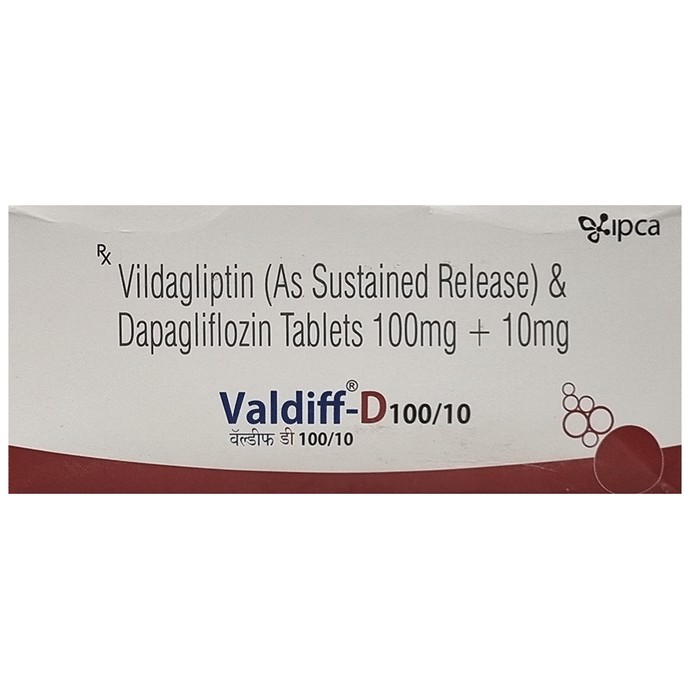
Valdiff D 10mg/100mg Tablet SR

Marketer
Ipca Laboratories Ltd
Salt Composition
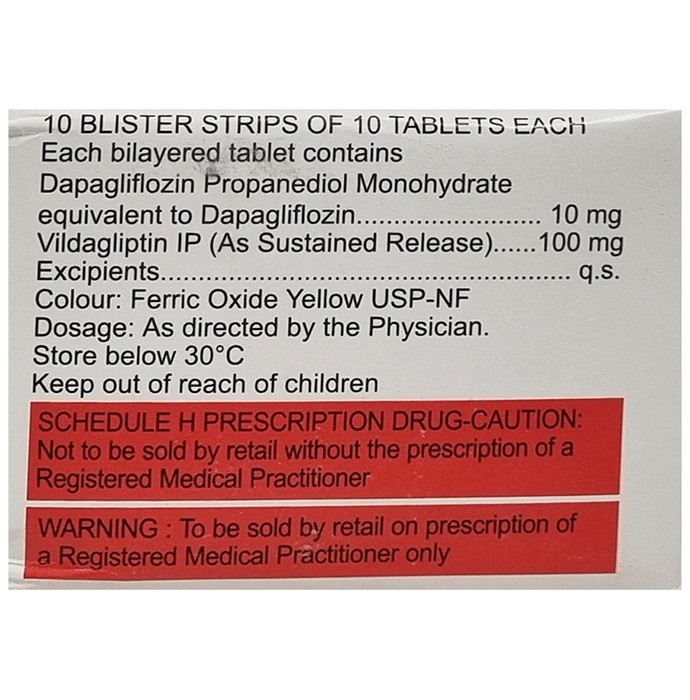
Dapagliflozin (10mg) + Vildagliptin (100mg)
Overview Valdiff D 10mg/100mg Tablet SR
Diabetol-D 10mg/100mg Extended-Release Tablets combine medications to effectively manage blood glucose. This treatment, used alongside diet and exercise, enhances glycemic control in adult patients with type 2 diabetes. It optimizes insulin use, resulting in reduced blood sugar. Diabetol-D 10mg/100mg ER Tablets may be administered with or without food, but consistent daily timing is recommended. Dosage is determined by your physician and should never be altered without their guidance; discontinuation risks elevated blood sugar and serious consequences such as renal impairment or vision loss. This medication forms part of a comprehensive diabetes management plan encompassing a healthy diet, regular physical activity, and weight management as directed by your doctor. Potential side effects include low blood sugar (hypoglycemia), vaginal yeast infections, urinary tract infections, lightheadedness, trembling, and headache. Adequate hydration is crucial to avoid dehydration. Genital fungal infections are possible; maintaining good hygiene helps mitigate this risk. Prior to starting treatment, disclose any kidney or liver issues, urinary tract infections, or diuretic use to your physician. Pregnant or lactating individuals require medical consultation before use. Limit alcohol consumption as it may heighten the chance of experiencing side effects. Regular blood glucose monitoring is essential during treatment.
Uses of Valdiff D 10mg/100mg Tablet SR
Managing type 2 diabetes
Major Benefits of Valdiff D 10mg/100mg Tablet SR:
Follow your doctor's instructions precisely regarding dosage and treatment length for Valdiff D 10mg/100mg SR Tablets. Ingest the tablet whole; avoid crushing, chewing, or breaking it. This medication can be taken with or without food, though consistent timing is recommended.
Common Side effects of Valdiff D 10mg/100mg Tablet SR:
- Headache
- Vaginal inflammation
- Balanitis
- Urinary tract infection
- Hypoglycemia (low blood glucose level)
- Dizziness
- Tremors
- Fatigue
- Nausea
- Rash
- Back pain
- Polyuria
- Increased hematocrit
- Decreased creatinine clearance
- Dyslipidemia
- Nasopharyngitis (inflammation of the throat and nasal passages)
How to use Valdiff D 10mg/100mg Tablet SR:
Follow your doctor's instructions precisely regarding the dosage and treatment length for this medication. Ingest the Valdiff D 10mg/100mg Tablet SR whole; avoid chewing, crushing, or breaking it. While this medication can be taken with or without food, consistent timing is recommended for optimal results.
How Valdiff D 10mg/100mg Tablet SR works:
The extended-release tablet, Valdiff D 10mg/100mg, combines two antidiabetic agents. Dapagliflozin works by enhancing glucose elimination through the urine, thus lowering blood sugar. Vildagliptin acts to decrease hepatic glucose production; this is achieved by boosting insulin secretion and suppressing glucagon, the hormone responsible for elevating blood glucose.
SAFETY ADVICE
 AlcoholCONSULT YOUR DOCTOR
Alcohol consumption alongside Valdiff D 10mg/100mg SR tablets has an unknown safety profile. Seek medical advice before combining them.
 PregnancyCONSULT YOUR DOCTOR
Data on the use of Valdiff D 10mg/100mg sustained-release tablets in pregnancy is lacking. Seek medical advice.
 Breast feedingCONSULT YOUR DOCTOR
Data on the use of Valdiff D 10mg/100mg sustained-release tablets while breastfeeding is lacking. Seek medical advice.
 DrivingCONSULT YOUR DOCTOR
The effect of Valdiff D 10mg/100mg Tablet SR on driving ability is undetermined. Refrain from driving if experiencing symptoms impairing concentration or reaction time.
 KidneyCONSULT YOUR DOCTOR
Data on Valdiff D 10mg/100mg SR tablet use in patients with renal impairment is scarce. Physician consultation is advised.
 LiverCONSULT YOUR DOCTOR
Data regarding the use of Valdiff D 10mg/100mg sustained-release tablets in individuals with hepatic impairment is scarce. Physician consultation is advised.
What if you forget to take Valdiff D 10mg/100mg Tablet SR :
Should you forget a Valdiff D 10mg/100mg SR tablet, take it immediately if you remember. But, if your next dose is nearly due, omit the missed one and resume your usual dosing routine. Never take two doses at once.
Facts to Know About Valdiff D 10mg/100mg Tablet SR
| Label | Value |
|---|---|
| Developing Habits | No. |
| Treatment Category | Diabetes Management |
 3,018 People bought this recently