


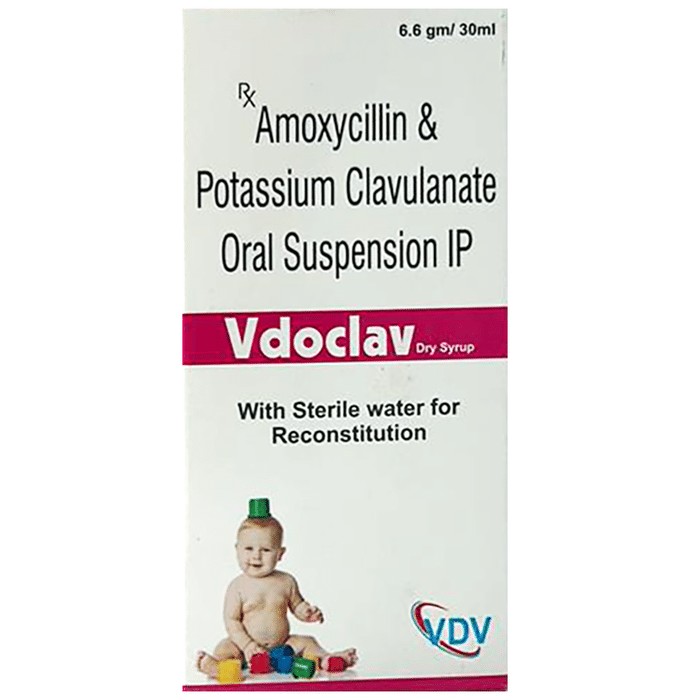
Vdoclav Dry Syrup

Marketer
VDV Pharmaceuticals Pvt Ltd
Salt Composition
Amoxycillin (200mg) + Clavulanic Acid (28.5mg)
Overview Vdoclav Dry Syrup
Pedilac Dry Syrup, an antibiotic, combats bacterial infections affecting the ears, nose, throat, chest, lungs, teeth, skin, and urinary system. Its effectiveness extends to bacteria resistant to other treatments, including tuberculosis. Administer Pedilac Dry Syrup to your child with or without food; however, administering it with food enhances absorption and minimizes stomach discomfort. The prescribed dosage, typically two to three times daily, depends on the infection's severity, type, and your child's weight and age. Strictly adhere to the prescribed dosage, timing, and method. If vomiting occurs within 30 minutes of administration, allow your child to settle before repeating the dose. Avoid doubling the dose if it's nearing the next scheduled administration. Potential side effects include vomiting, diarrhea, nausea, stomach pain, and allergic reactions. While these usually subside, persistent or concerning symptoms warrant immediate consultation with your child's physician. Provide your child's complete medical history to the doctor, including prior allergies, heart conditions, blood disorders, birth defects, respiratory issues, lung abnormalities, digestive problems, skin conditions, liver dysfunction, and kidney impairment. This information aids in accurate dosage adjustments and comprehensive treatment planning.
Uses of Vdoclav Dry Syrup
Combating Multi-Drug Resistant Tuberculosis and Bacterial Infections
Major Benefits of Vdoclav Dry Syrup:
Follow your physician's instructions precisely regarding dosage and treatment length for this medication. Always consult the product label prior to administration. Use a measuring cup for accurate oral dosing. Ensure thorough shaking before each use. Administer Vdoclav Dry Syrup with a meal.
Common Side effects of Vdoclav Dry Syrup:
- Abdominal pain
- Allergy
- Vomiting
- Nausea
- Diarrhea
- Mucocutaneous candidiasis
How to use Vdoclav Dry Syrup:
Follow your doctor's instructions precisely regarding dosage and treatment length for this medication. Always consult the product label prior to administration. Use a measuring cup for accurate dosing and take orally. Ensure thorough shaking before each use. Consume Vdoclav Dry Syrup with food.
How Vdoclav Dry Syrup works:
Vdoclav Dry Syrup, an antibiotic formulation, combines amoxycillin and clavulanic acid. Amoxycillin's mechanism involves disrupting bacterial cell wall synthesis, a crucial process for bacterial viability. Conversely, clavulanic acid neutralizes beta-lactamase, an enzyme produced by resistant strains that would otherwise deactivate amoxycillin. This synergistic action makes the drug effective against a broad spectrum of infections.
SAFETY ADVICE
 AlcoholCONSULT YOUR DOCTOR
Alcohol consumption alongside Vdoclav Dry Syrup lacks established safety data. Seek medical advice before combining them.
 PregnancySAFE IF PRESCRIBED
The use of Vdoclav Dry Syrup during pregnancy is typically deemed safe. Preclinical trials in animals have revealed minimal or no harmful consequences for fetal development; nonetheless, data from human trials are scarce.
 Breast feedingSAFE IF PRESCRIBED
Vdoclav Dry Syrup presents minimal risk during lactation. Research in humans indicates negligible transfer of the medication into breast milk, posing no known threat to the infant.
 DrivingSAFE
Driving ability is typically unaffected by Vdoclav Dry Syrup.
 KidneyCAUTION
Patients with kidney disorders should use Vdoclav Dry Syrup cautiously, potentially requiring dosage modification. A physician's consultation is advised. Newborns and infants also necessitate a lower dose because of their immature kidney function.
 LiverCAUTION
Patients with liver impairment should use Vdoclav Dry Syrup cautiously, potentially requiring dosage modification. A physician's consultation is advised. Liver function should be regularly assessed during treatment with this medication.
What if you forget to take Vdoclav Dry Syrup :
Remember to administer the omitted dose immediately upon recollection, unless your physician instructs differently. However, if the next scheduled dose is imminent, forgo the missed one. Avoid doubling the dose to compensate, and instead, adhere to the recommended medication schedule.
Facts to Know About Vdoclav Dry Syrup
| Label | Value |
|---|---|
| Developing Habits | No. |
| Treatment Category | Infectious Disease Treatments |
 3,018 People bought this recently