


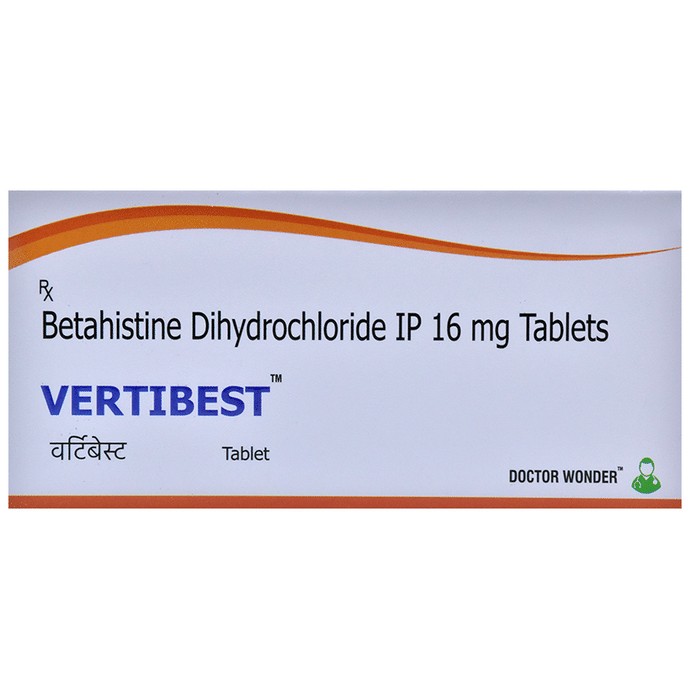
Vertibest Tablet

Marketer
Doctor Wonder Private Limited
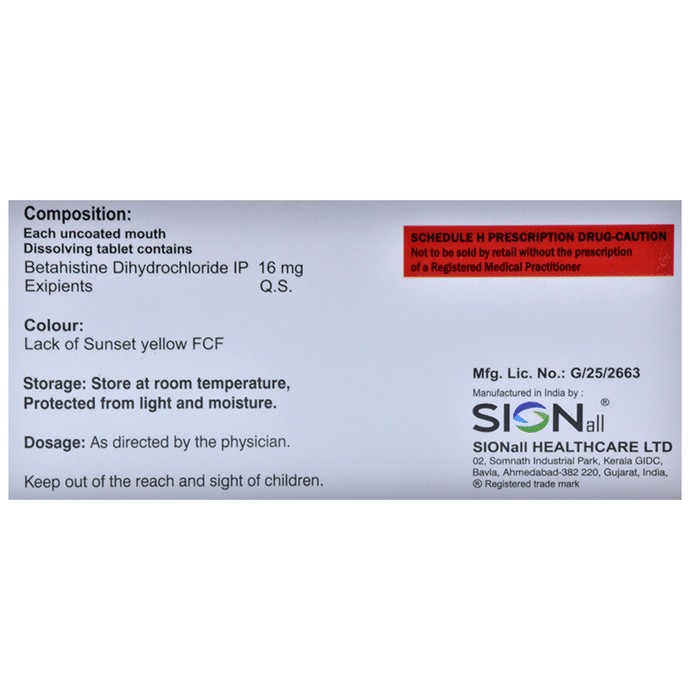
Salt Composition
Betahistine (16mg)
Overview Vertibest Tablet
Ménière's disease, an inner ear disorder causing vertigo, tinnitus, and hearing loss (likely due to excess inner ear fluid), is addressed by Vertibest Tablets. These tablets alleviate symptoms by decreasing fluid buildup. For optimal results, swallow Vertibest Tablets whole with water, consistently at the same time(s) daily. Dosage and frequency are determined by your physician based on symptom severity. Continued use, as directed, for several months may be necessary, even with symptom improvement. Common side effects include headache, nausea, and indigestion, potentially accompanied by abdominal pain and bloating. Consuming the medication with food may mitigate gastrointestinal discomfort. Prior to commencing treatment, consult your doctor if you have a peptic ulcer, asthma, or hypertension or hypotension. Complete disclosure of all other medications is crucial for safety. Furthermore, discuss use with your physician if you are pregnant, planning pregnancy, or breastfeeding.
Primary Ingredients of Vertibest Tablet
The provided text is "undefined," therefore no rephrasing is possible.
Uses of Vertibest Tablet
Managing Meniere's disease
Major Benefits of Vertibest Tablet:
Administer this medication precisely as your physician directs, adhering to both the prescribed dosage and treatment duration. Ingest the tablet whole; avoid chewing, crushing, or fracturing it. Vertibest Tablets can be consumed with or without food, though consistent timing is recommended.
Common Side effects of Vertibest Tablet:
- Headache
- Indigestion
- Nausea
- Stomach pain
- Bloating
How to use Vertibest Tablet:
Consume this medication according to your physician's prescribed dosage and schedule. Ingest the tablet whole; avoid chewing, crushing, or fracturing it. Vertibest Tablets can be administered with or without food, although consistent timing is recommended.
How Vertibest Tablet works:
Histamine-like Vertibest Tablets enhance inner ear circulation, thereby lessening excessive fluid pressure. This fluid buildup can trigger vertigo, nausea, and dizziness—characteristic symptoms of Ménière's disease—by transmitting aberrant signals to the brain. Vertibest Tablets further mitigate these Ménière's symptoms by reducing nerve impulse transmission from the inner ear.
SAFETY ADVICE
 AlcoholSAFE
Vertibest Tablet use alongside alcohol consumption presents no known adverse reactions.
 PregnancyCONSULT YOUR DOCTOR
The use of Vertibest Tablets during pregnancy may pose risks. While human research is scarce, animal studies indicate potential harm to the unborn child. A physician will assess the potential advantages against any risks before prescribing this medication. It is advisable to seek medical counsel.
 Breast feedingCONSULT YOUR DOCTOR
The use of Vertibest Tablets while breastfeeding is likely inadvisable. Available human data indicates a potential for the medication to transfer to breast milk, posing a risk to the infant.
 DrivingSAFE
Driving ability is typically unaffected by Vertibest Tablet.
 KidneySAFE IF PRESCRIBED
Using Vertibest Tablets in individuals with kidney disease appears to pose minimal risk. Existing evidence indicates dose modification may not be necessary, however, physician consultation is advised.
 LiverCONSULT YOUR DOCTOR
Data regarding Vertibest Tablet's use in individuals with hepatic impairment is scarce. Physician consultation is advised.
What if you forget to take Vertibest Tablet :
Omit any missed Vertibest Tablet dose and resume your usual medication regimen. Avoid taking a double dose.
Facts to Know About Vertibest Tablet
| Label | Value |
|---|---|
| Chemical Type | Histamine Analogue |
| Developing Habits | No. |
| Treatment Category | Neuroscience Central Nervous System |
| Actions | Meniere's Disease and Histamine Analogs |
 3,018 People bought this recently