


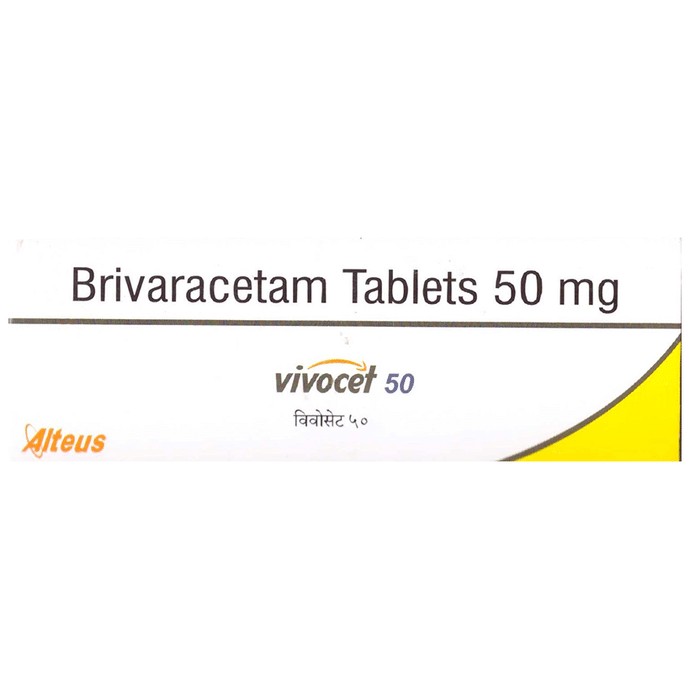
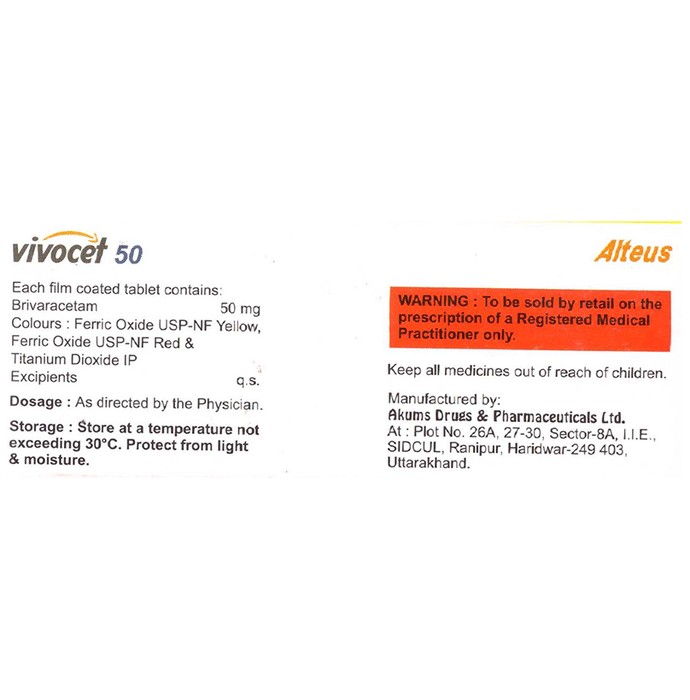
Vivocet 50 Tablet

Marketer
Alteus Biogenics Pvt Ltd
Salt Composition
Brivaracetam (50mg)
Overview Vivocet 50 Tablet
Epileptic seizures are managed with the anticonvulsant medication, Vivocet 50mg tablets. This drug can be administered independently or in conjunction with other medications to control seizure activity. Consistent use is crucial for sustained seizure prevention. Vivocet 50mg works by reducing abnormal brain electrical discharges. For optimal efficacy, take it daily at the same time, with or without food. Your physician will determine the appropriate dosage and frequency to effectively manage your seizures, potentially adjusting it gradually. Long-term treatment is usually recommended; continue taking it as prescribed, even if feeling well, as discontinuation or missed doses risk increased seizure frequency. Never stop taking Vivocet 50mg without your doctor's instruction, as abrupt cessation may exacerbate seizures. Common side effects, such as dizziness, headaches, nausea, and vomiting, are often mild and tend to lessen over time. However, behavioral shifts (including aggression, irritability, and agitation) may also occur. While most side effects are manageable, some can be severe. Importantly, suicidal ideation has been reported in a small percentage of patients. Report any worsening mood immediately to your doctor. Prior to initiating treatment, inform your doctor of any pre-existing liver or kidney disease, depression, suicidal thoughts, pregnancy, or pregnancy plans. Breastfeeding mothers should also seek medical counsel before using Vivocet 50mg.
Uses of Vivocet 50 Tablet
Convulsive disorders
Major Benefits of Vivocet 50 Tablet:
Follow your doctor's instructions precisely regarding dosage and treatment length for this medication. The tablet should be swallowed whole; avoid chewing, crushing, or breaking it. Vivocet 50 Tablets can be administered with or without food, though consistent timing is recommended.
Common Side effects of Vivocet 50 Tablet:
- Behavioral changes
- Agitation
- Aggressive behavior
- Dizziness
- Sedation
- Drowsiness
- Neuropsychiatric symptoms
How to use Vivocet 50 Tablet:
Follow your doctor's instructions precisely regarding the dosage and treatment length for this medication. Ingest the Vivocet 50 Tablet whole; avoid chewing, crushing, or fracturing it. This medication can be taken with or without food, but consistent timing is recommended.
How Vivocet 50 Tablet works:
Epileptic seizures are managed by Vivocet 50mg tablets, an anticonvulsant. Its mechanism involves binding to synaptic vesicle protein 2A (SV2A) receptors on neuronal membranes. This action reduces hyperactive neuronal firing and thus inhibits the propagation of seizure-inducing electrical impulses within the brain.
SAFETY ADVICE
 AlcoholUNSAFE
Combining Vivocet 50 Tablet and alcohol is not advisable due to safety concerns.
 PregnancyCONSULT YOUR DOCTOR
Using Vivocet 50 Tablet during pregnancy may pose risks. While human research is scant, animal studies indicate potential harm to the unborn child. A physician will assess the advantages against possible dangers prior to prescribing. Seek medical advice.
 Breast feedingCONSULT YOUR DOCTOR
Data on Vivocet 50 Tablet use while breastfeeding is lacking. Seek medical advice from your physician.
 DrivingUNSAFE
Taking Vivocet 50 Tablet may cause drowsiness, blurred vision, and dizziness, reducing alertness. Refrain from driving if you experience these effects.
 KidneySAFE IF PRESCRIBED
Vivocet 50 Tablet poses no safety concerns for patients with kidney impairment; dosage modification is unnecessary. However, its use is contraindicated in end-stage renal disease given the absence of supporting clinical trial evidence.
 LiverCAUTION
Patients with hepatic impairment should use Vivocet 50mg tablets cautiously; dosage modification may be necessary. Physician consultation is advised.
What if you forget to take Vivocet 50 Tablet :
NA
Facts to Know About Vivocet 50 Tablet
| Label | Value |
|---|---|
| Type of Compound | Levetiracetam analog |
| Potential for Dependence | None. |
| Type of Medication | Nervous System |
| Mechanism of Action | Protein ligand (antiepileptic drug) associated with synaptic vesicle 2. |
 3,018 People bought this recently