


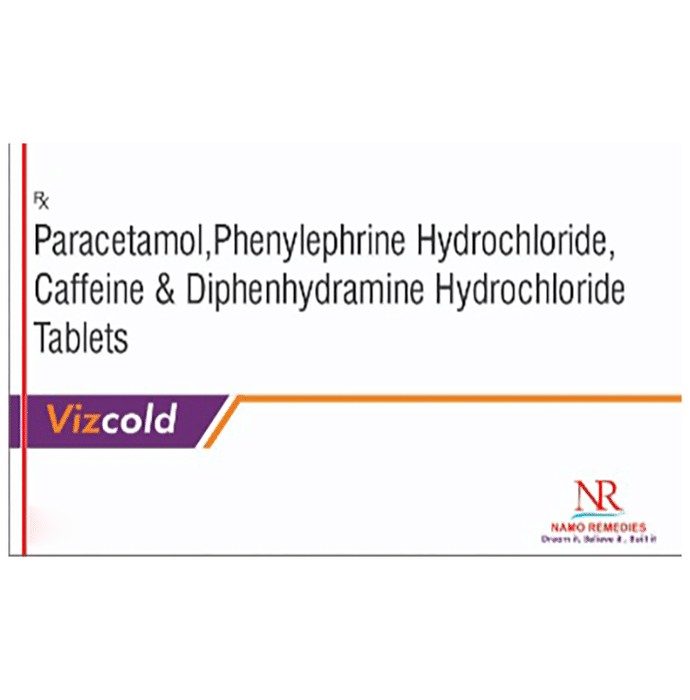
Vizcold Tablet

Marketer
Namo Remedies
Salt Composition
Caffeine (30mg) + Diphenhydramine (25mg) + Paracetamol (500mg) + Phenylephrine (5mg)
Overview Vizcold Tablet
Nasal Relief tablets are indicated for symptomatic relief of the common cold. They offer temporary alleviation of nasal congestion. The medication also assists in managing allergic symptoms such as rhinorrhea and lacrimation. Nasal Relief tablets may be administered with or without food, following the dosage and duration prescribed by your physician. Taking it with food may minimize gastrointestinal discomfort. Dosage is individualized based on your condition and response. Continue the prescribed course of treatment; premature discontinuation may lead to symptom recurrence and potential exacerbation. Inform your physician of all concurrent medications, as interactions may occur. Common adverse effects include nausea, emesis, abdominal pain, sleeplessness, agitation, impaired coordination, and cephalalgia. Most are transient and self-limiting. Report any concerning side effects immediately to your doctor. Drowsiness and vertigo are possible; avoid activities requiring alertness until the effects are known. Refrain from alcohol consumption during treatment to avoid potentiating dizziness. Prior to initiating therapy, disclose any hepatic or renal impairments to enable appropriate dosage adjustment. Furthermore, inform your doctor if you are pregnant, contemplating pregnancy, or breastfeeding.
Primary Ingredients of Vizcold Tablet
No text was provided to rewrite.
Uses of Vizcold Tablet
Managing the common cold
Major Benefits of Vizcold Tablet:
Consume this medication precisely as your physician directs, adhering to both the prescribed dosage and duration. Ingest the tablet whole; avoid chewing, crushing, or fracturing it. Vizcold Tablets can be taken with or without food, although consistent timing is recommended for optimal results.
Common Side effects of Vizcold Tablet:
- Nausea
- Vomiting
- Insomnia (difficulty in sleeping)
- Dizziness
- Impaired coordination
- Headache
- Sedation
- Inability to concentrate
- Irritability
- Tremors
- Diarrhea
- Dryness in mouth
- Fatigue
- Blurred vision
How to use Vizcold Tablet:
Administer this medication precisely as your physician directs, adhering to both the prescribed dosage and treatment period. Ingest the tablet whole; avoid chewing, crushing, or fracturing it. Vizcold Tablets can be consumed with or without food, although consistent timing is recommended.
How Vizcold Tablet works:
Caffeine, diphenhydramine, paracetamol, and phenylephrine combine in Vizcold tablets to alleviate typical cold symptoms.
SAFETY ADVICE
 AlcoholUNSAFE
Combining Vizcold Tablet with alcohol is not advisable.
 PregnancyCONSULT YOUR DOCTOR
Use of Vizcold Tablet during pregnancy may pose risks. While human studies are scarce, animal research indicates potential harm to a fetus. A physician will assess the advantages against possible risks prior to prescribing. Consult your doctor for advice.
 Breast feedingSAFE IF PRESCRIBED
Breastfeeding mothers can likely use Vizcold Tablets without significant harm to their infants. Available human data indicates minimal risk to the baby from this medication.
 DrivingUNSAFE
Taking Vizcold Tablets might reduce attentiveness, impair vision, and cause drowsiness or dizziness. Refrain from driving if you experience these effects.
 KidneyCAUTION
Patients with advanced kidney impairment should use Vizcold tablets cautiously, potentially requiring modified dosages. A physician's consultation is recommended. Regular blood pressure checks are advised to guide dosage modifications.
 LiverCAUTION
Patients with liver impairment should use Vizcold tablets cautiously; dosage modification may be necessary. Physician consultation is advised.
What if you forget to take Vizcold Tablet :
Should you forget a Vizcold Tablet dose, take it promptly. Nevertheless, if your next dose is imminent, omit the missed one and resume your usual dosing pattern. Avoid taking a double dose.
Facts to Know About Vizcold Tablet
| Label | Value |
|---|---|
| Developing Good Habits | No. |
| Type of Treatment | Breathing |
 3,018 People bought this recently