


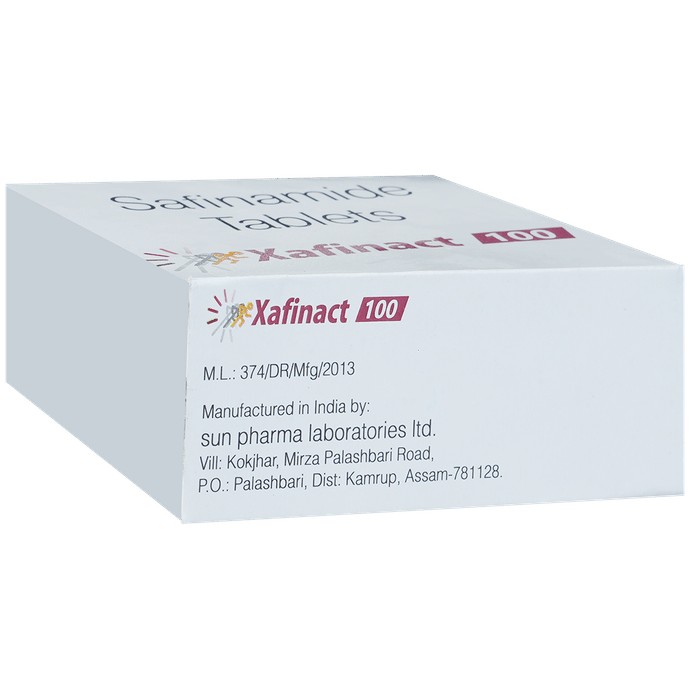
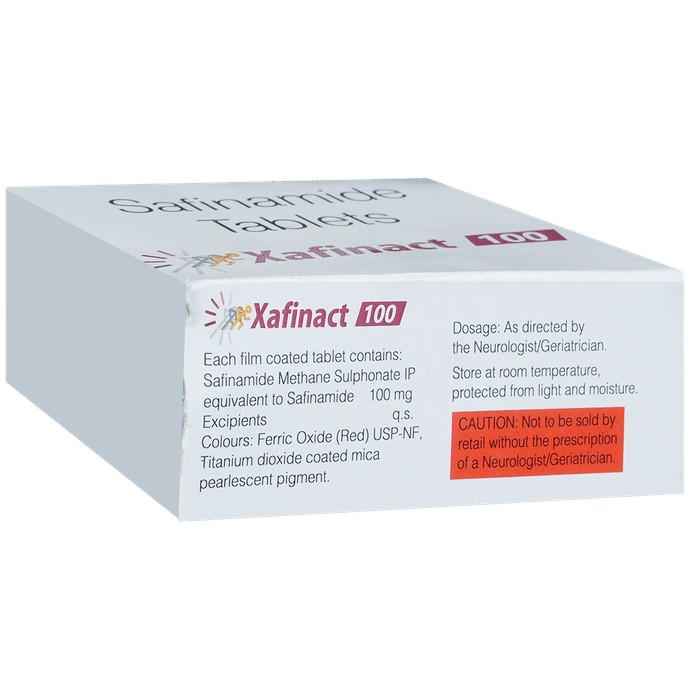
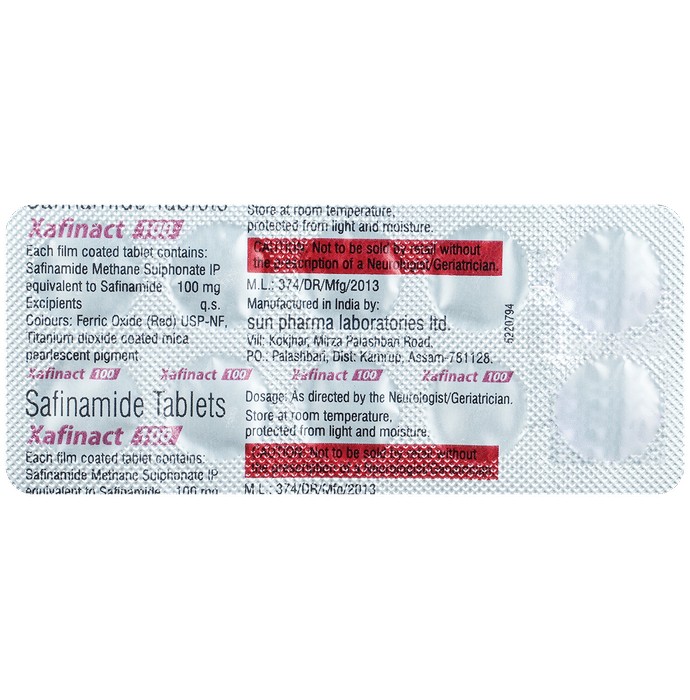
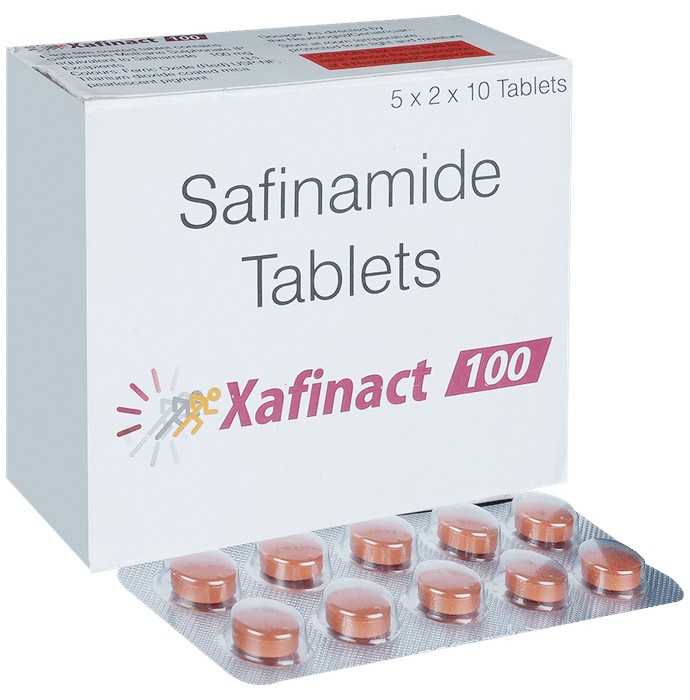
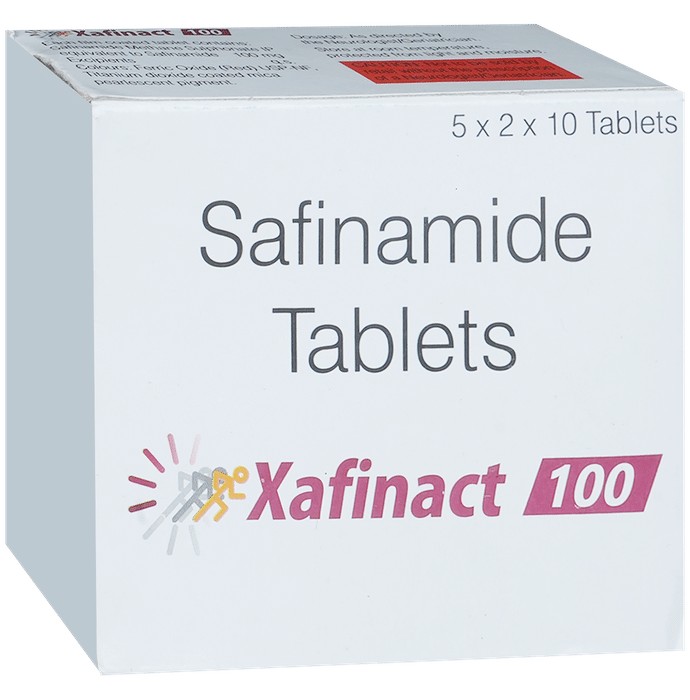
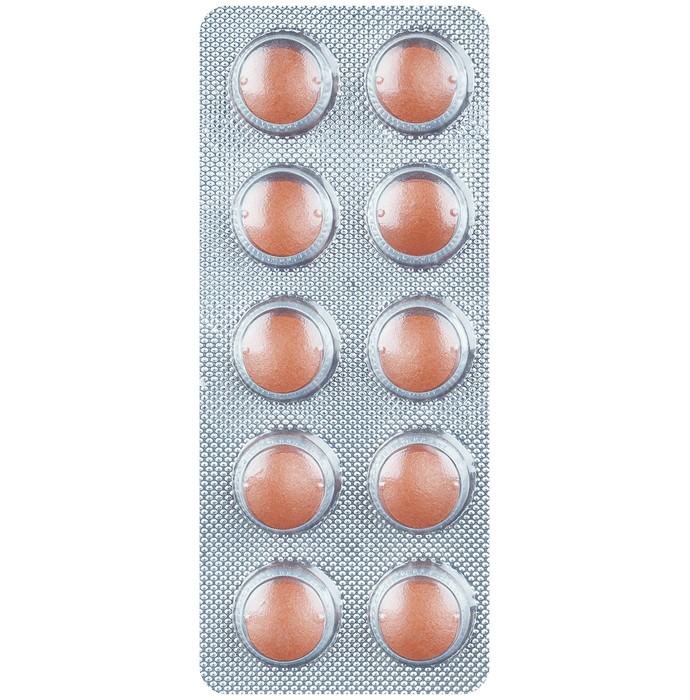
Xafinact 100 Tablet

Marketer
Sun Pharmaceutical Industries Ltd
Salt Composition
Safinamide (100mg)
Overview Xafinact 100 Tablet
Parkinson's disease is treated with the medication Xafinact 100mg tablets, which improves motor control and reduces tremors and rigidity. This medication elevates dopamine levels in the brain, a neurotransmitter crucial for movement. Xafinact 100mg can be administered alone or concurrently with other drugs, with or without food, ideally in the morning, consistently at the same time daily for optimal therapeutic levels. Follow your physician's prescribed dosage and duration. If a dose is missed, take it immediately upon recall; avoid skipping doses and complete the entire course of treatment. Abrupt discontinuation is unsafe and may lead to disorientation, muscle stiffness, and fever; consult your doctor before stopping. Common side effects include cough, involuntary muscle movements, falls, nausea, and insomnia. Drowsiness and dizziness are possible; avoid driving or activities requiring alertness until the drug's effects are known. A high-protein diet (meat, poultry, dairy) should be limited or avoided due to potential blood pressure elevation. Inform your healthcare provider of all other medications you are taking, as interactions may occur. Pregnant or breastfeeding individuals should consult their doctor before using Xafinact 100mg.
Primary Ingredients of Xafinact 100 Tablet
The provided text is "undefined," therefore no rephrasing is possible.
Uses of Xafinact 100 Tablet
Parkinson's disorder
Major Benefits of Xafinact 100 Tablet:
Consume this medication precisely as your physician directs, adhering to both the prescribed dosage and treatment period. Ingest the tablet whole; avoid chewing, crushing, or fracturing it. Xafinact 100 Tablets can be administered with or without food; however, consistent timing is recommended.
Common Side effects of Xafinact 100 Tablet:
- Cough
- Flu-like symptoms
- Insomnia (difficulty in sleeping)
- Involuntary muscle movement
- Fall
- Nausea
How to use Xafinact 100 Tablet:
Administer this medication precisely as your physician directs, adhering to the prescribed dosage and timeframe. Ingest the tablet whole; avoid chewing, crushing, or fracturing it. Xafinact 100 Tablets can be consumed with or without food, though consistent timing is recommended.
How Xafinact 100 Tablet works:
Xafinact 100 Tablets enhance brain dopamine levels, a neurotransmitter crucial for regulating motor function.
SAFETY ADVICE
 AlcoholUNSAFE
Concomitant use of Xafinact 100 mg tablets and alcohol may result in increased sleepiness.
 PregnancyCONSULT YOUR DOCTOR
The use of Xafinact 100 Tablet during pregnancy may pose risks. While human research is scant, animal studies indicate potential harm to the fetus. A physician will assess the potential benefits against any risks prior to prescribing. Seek medical advice before using this medication.
 Breast feedingCONSULT YOUR DOCTOR
The use of Xafinact 100 Tablet while breastfeeding is likely inadvisable. Available human data indicates potential transfer of the medication into breast milk, posing a possible risk to the infant.
 DrivingUNSAFE
Taking Xafinact 100 Tablet may cause drowsiness, blurred vision, and dizziness, potentially impairing alertness. Driving is discouraged if these effects are experienced.
 KidneySAFE IF PRESCRIBED
Xafinact 100 Tablet appears to pose minimal risk for individuals with kidney impairment. Current evidence indicates dose modification may not be necessary, though further study is warranted. Physician consultation is advised.
 LiverCAUTION
Patients with hepatic impairment should use Xafinact 100mg tablets cautiously; dosage modification may be necessary. Physician consultation is advised.
What if you forget to take Xafinact 100 Tablet :
Omit any missed Xafinact 100 Tablet dose and resume your regular medication regimen. Avoid taking a double dose.
Facts to Know About Xafinact 100 Tablet
| Label | Value |
|---|---|
| Chemical Category | Carboxylic acid and its derivatives |
| Developing Good Habits | No. |
| Treatment Category | Central Nervous System (CNS) Neurology |
 3,018 People bought this recently