


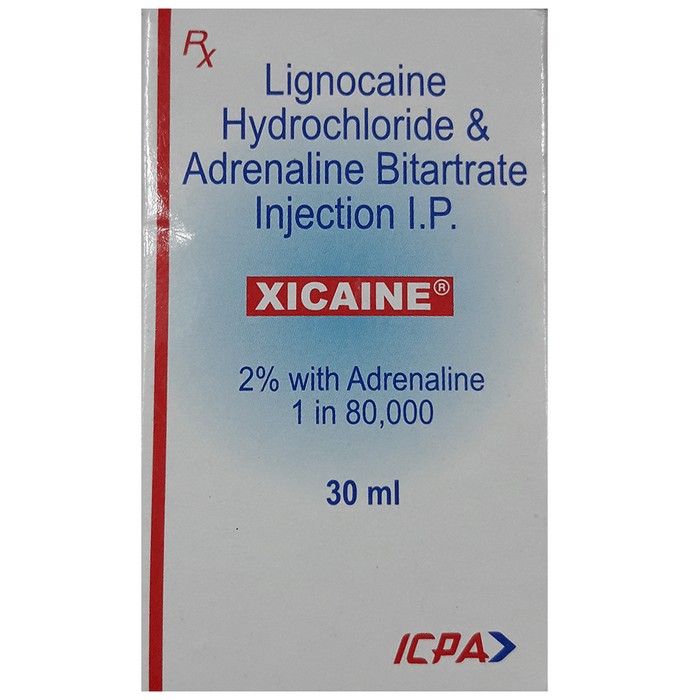

Xicaine Injection

Marketer
Icpa Health Products Ltd
Salt Composition
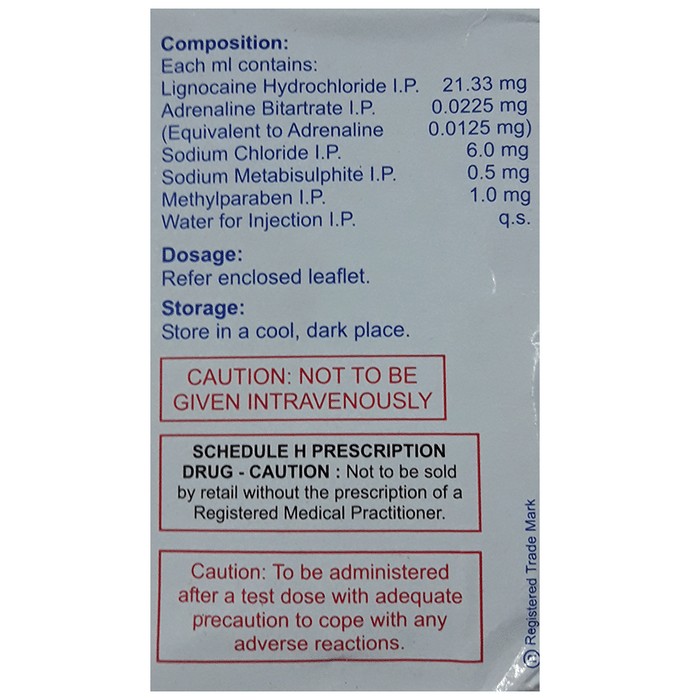
Lidocaine (21.33mg/ml) + Adrenaline (0.0225mg/ml)
Overview Xicaine Injection
Xylocaine Injection, a combined anesthetic agent, provides localized pain relief by interrupting nerve signals to the brain. Administered only by a physician, the dosage and treatment length are determined solely by your doctor. Self-injection is strictly prohibited. Adhere meticulously to your doctor's instructions. Common, generally mild, side effects may include pale skin, burning, stinging, or itching. Persistent or bothersome symptoms should be reported to your physician. Prior to treatment, disclose any liver or kidney conditions, pregnancy, or breastfeeding. Comprehensive disclosure of all other medications you are currently using is crucial, as interactions are possible.
Primary Ingredients of Xicaine Injection
No information provided. Please provide the text you wish me to rephrase.
Uses of Xicaine Injection
Regional numbing achieved via localized anesthetic.
Major Benefits of Xicaine Injection:
This medication will be administered by your physician or registered nurse; self-medication is strictly prohibited.
Common Side effects of Xicaine Injection:
- Pale skin
- Burning sensation
- Stinging sensation
- Erythema (skin redness)
- Itching
- Pain
- Petechiae (red or purple spot caused by bleeding into the skin)
How to use Xicaine Injection:
This medication will be administered by your physician or registered nurse; self-medication is strictly prohibited.
How Xicaine Injection works:
Xylocaine Injection merges lidocaine, a local anesthetic, with epinephrine, a vasoconstrictor. Lidocaine numbs by interrupting nerve pain signals to the brain, reducing pain perception. Epinephrine constricts blood vessels, slowing lidocaine's absorption and extending its anesthetic action. This synergistic effect provides effective localized anesthesia, enabling painless medical procedures.
SAFETY ADVICE
 AlcoholCAUTION
Use caution when combining Xicaine Injection and alcohol. Seek medical advice before doing so.
 PregnancyCONSULT YOUR DOCTOR
The use of Xicaine Injection during pregnancy may pose risks. While human data is scarce, animal research indicates potential harm to the fetus. A physician will assess the advantages against possible dangers prior to prescribing. Physician consultation is advised.
 Breast feedingCONSULT YOUR DOCTOR
The use of Xicaine Injection while breastfeeding is likely inadvisable. Available human data indicates potential transfer of the medication into breast milk, posing a possible risk to the infant.
 DrivingSAFE
Driving ability is typically unaffected by Xicaine Injection.
 KidneyCAUTION
The administration of Xicaine Injection requires careful consideration in individuals with significant renal impairment. Dosage modification for Xicaine Injection might be necessary. Physician consultation is advised.
 LiverCAUTION
Individuals with hepatic impairment should use Xicaine Injection cautiously; dosage modification may be necessary. Physician consultation is advised.
What if you forget to take Xicaine Injection :
NA
Facts to Know About Xicaine Injection
| Label | Value |
|---|---|
| Developing Habits | No. |
| Treatment Category | Heart |
 3,018 People bought this recently