Search Icon

AUM Pharmacy

Hi there!

Hello, Login
All Categories
VisaVisaVisa
slide-0
slide-1
slide-2
slide-3

Zolmist Nasal Spray

Prescription Icon
Prescription Required

Marketer

Cipla Ltd

Salt Composition

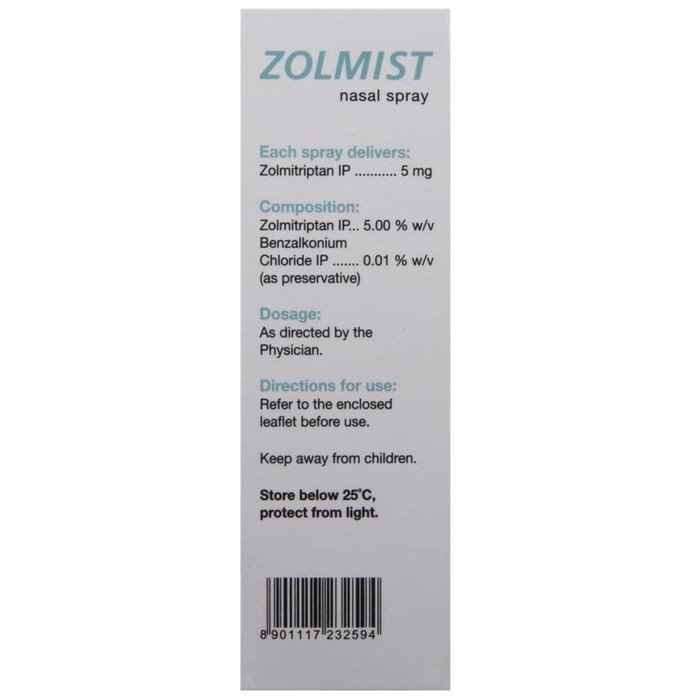
Zolmitriptan (5mg)

Overview Zolmist Nasal Spray

Nasalcrom, a migraine treatment, effectively manages acute migraine episodes. Its mechanism involves vasoconstriction, alleviating headache pain and preventing escalation of the attack. Nasalcrom is administered nasally. Consistent dosing is crucial; complete the prescribed regimen, even with symptom improvement. Missed doses should be taken immediately upon recall. Continue use as directed by your physician; abrupt cessation is inadvisable. Report any abdominal pain, bloody stools, or elevated blood pressure to your doctor promptly. Prolonged use may necessitate regular eye examinations, as advised by your physician. Potential side effects include drowsiness, fatigue, thoracic and cervical constriction, xerostomia, and peripheral paresthesia (numbness and tingling in extremities). Dizziness is possible; avoid driving or operating machinery until its effects are known. Blood pressure elevation may occur; monitor your blood pressure regularly. Seek immediate medical attention for persistent, severe chest pain, wheezing, respiratory distress, or skin eruptions.

Uses of Zolmist Nasal Spray

Severe, sudden onset migraine

Major Benefits of Zolmist Nasal Spray:

Administer this medication precisely as your physician prescribes, adhering to both dosage and treatment length. Consult the product label for complete instructions prior to use. Insert the nozzle into a single nostril, occluding the other. Aim the spray towards the nasal passage walls, avoiding the cartilage separating the nostrils. Inhale softly and maintain an upright posture while dispensing. Repeat the procedure in the opposite nostril.

Common Side effects of Zolmist Nasal Spray:

  • Dizziness
  • Taste change
  • Dryness in mouth
  • Nausea
  • Vomiting
  • Weakness
  • Sleepiness
  • Paresthesia (tingling or pricking sensation)
  • Headache
  • Hyperesthesia (increased sensitivity)
  • Warm sensation
  • Abdominal pain
  • Difficulty in swallowing
  • Palpitations
  • Muscle weakness

How to use Zolmist Nasal Spray:

Administer this medication precisely as your physician directs, adhering to the prescribed dosage and treatment schedule. Always consult the product label for complete instructions prior to use. Introduce the nozzle into a single nostril, occluding the other. Aim the spray towards the nasal passages, avoiding the septum. Inhale softly while dispensing the medication, maintaining an upright posture. Replicate this procedure for the remaining nostril.

How Zolmist Nasal Spray works:

The expansion of blood vessels in the head is believed to trigger migraine pain. Zolmist Nasal Spray, applied nasally, is quickly integrated into the circulatory system via the nasal mucosa. Its action involves reducing the diameter of cranial blood vessels, interrupting pain signals en route to the brain, and inhibiting the production of substances responsible for nausea and other migraine-associated discomfort. This mechanism effectively mitigates the migraine episode.

SAFETY ADVICE

AlcoholAlcoholNone

No known drug interactions.

PregnancyPregnancyCONSULT YOUR DOCTOR

The use of Zolmist Nasal Spray during pregnancy may pose risks. While human research is scant, animal studies indicate potential harm to the fetus. A physician will assess the advantages against possible hazards prior to prescribing. Seek medical advice.

Breast feedingBreast feedingCONSULT YOUR DOCTOR

Data on the use of Zolmist Nasal Spray while breastfeeding is lacking. Seek medical advice from your physician.

DrivingDrivingNone

No drug interactions identified.

KidneyKidneyNone

No known drug interactions.

LiverLiverNone

No drug interactions identified.

What if you forget to take Zolmist Nasal Spray :

Should you forget a dose of Zolmist Nasal Spray, administer it at your earliest convenience. Nevertheless, if your next scheduled dose is imminent, omit the missed dose and resume your usual dosing regimen. Avoid taking a double dose.

Facts to Know About Zolmist Nasal Spray

LabelValue
Chemical Type Tryptamines and their analogs
Developing Habits No.
Treatment Category Neuroscience of the Central Nervous System

FAQs on Zolmist Nasal Spray

Persistent daily or frequent headaches, even while regularly using headache medication, may indicate medication overuse headache. Consult your doctor; they may recommend a medication break.
Zolmist Nasal Spray overdose can lead to fainting, dizziness, bradycardia, cardiac arrhythmias, vomiting, and urinary/bowel incontinence.
Zolmist Nasal Spray is not for preventing migraine or cluster headaches; it's solely for treating diagnosed migraine.
Inform your doctor before using Zolmist Nasal Spray if you have heart disease (including family history), high blood pressure, diabetes, liver or kidney disease, or if you smoke. Women who have reached menopause and men aged 40 or older should also disclose this information. Additionally, report any headaches accompanied by dizziness, gait difficulty, incoordination, or limb weakness. Finally, mention any current use of antidepressants like sertraline, escitalopram oxalate, fluoxetine, venlafaxine, or duloxetine, and any history of brief chest pain or tightness.
Several factors can trigger migraines. Common culprits include caffeine withdrawal, hormonal fluctuations (associated with menstruation or birth control), disrupted sleep patterns (insufficient sleep or changes in routine), alcohol consumption, skipped meals, and smoking. Intense physical exertion, loud noises, bright lights, strong smells, smoke exposure, stress, and anxiety can also initiate a migraine.
Zolmist Nasal Spray, a triptan—a type of tryptamine-based medication—should not be used with other triptans. Combining triptans risks increased blood pressure and potentially, a heart attack.
Migraines often have a hereditary component, affecting women more frequently than men. Pregnancy can reduce migraine frequency in some women, though not universally.
Migraine sufferers sometimes experience an aura beforehand. This can manifest as visual disturbances (flashing lights, zigzags, blind spots), sensory changes (numbness, tingling, dizziness, imbalance), or even speech difficulties and, rarely, loss of consciousness.
Migraine preventative medications are typically prescribed when lifestyle modifications to avoid triggers prove insufficient, or in cases of frequent or severely debilitating migraine attacks.
Zolmist Nasal Spray does not cause liver damage. However, inform your doctor of any pre-existing liver conditions before using it.
Use Zolmist Nasal Spray as soon as a migraine begins. This medication is for treating migraines, not preventing them. Follow your doctor's instructions precisely. If unsure about anything, consult your doctor or pharmacist.
Zolmist Nasal Spray may raise blood pressure in some users, so monitor your blood pressure while using it.
Persistent daily or frequent headaches, even with or because of regular pain relief, may indicate medication overuse headache. Consult your doctor; they might recommend temporarily stopping your medication.
Zolmist Nasal Spray overdose can lead to fainting, dizziness, bradycardia, cardiac arrhythmias, vomiting, and urinary/bowel incontinence.
Zolmist Nasal Spray isn't for preventing migraine or cluster headaches; it's solely for treating diagnosed migraine attacks.
Inform your doctor before using Zolmist Nasal Spray if you have heart disease (including family history), high blood pressure, diabetes, liver or kidney disease, or if you smoke. Women experiencing menopause and men aged 40 and older should also disclose this information. Report any headaches accompanied by dizziness, gait problems, incoordination, or limb weakness. Finally, mention any current use of antidepressants like sertraline, escitalopram oxalate, fluoxetine, venlafaxine, or duloxetine, and any history of brief chest pain or tightness.
Various factors can trigger migraines. Common culprits include caffeine withdrawal, hormonal fluctuations (related to menstruation or birth control), sleep disturbances (insufficient sleep), alcohol consumption, skipped meals, and smoking. Intense physical exertion, loud noises, bright lights, strong scents, smoke exposure, stress, and anxiety can also initiate a migraine.
Zolmist Nasal Spray is a triptan, a type of tryptamine-based medication. Avoid using other triptans concurrently with Zolmist, as this combination may increase the risk of heart attack and high blood pressure.
Migraines often have a hereditary component, affecting women more frequently than men. Pregnancy can sometimes reduce migraine frequency in some women, but not consistently.
Migraine sufferers sometimes experience an aura beforehand. This might involve visual disturbances like flashing lights or zigzag lines, blind spots, numbness, dizziness, tingling sensations, or imbalance. In rare cases, speech difficulty or loss of consciousness may occur.
Preventive migraine medications are typically prescribed when lifestyle modifications to avoid triggers prove ineffective, or if you suffer from very severe or frequent migraine attacks.
Zolmist Nasal Spray is not associated with liver damage. However, inform your doctor of any pre-existing liver conditions before using it.
Zolmist Nasal Spray
646
MRP 787
17% off
