


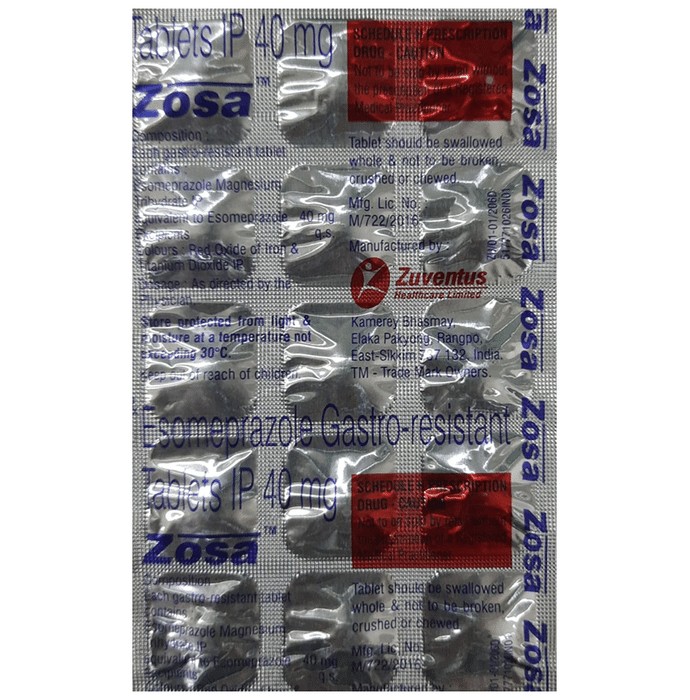
Zosa Tablet

Marketer
Zuventus Healthcare Ltd
Salt Composition
Esomeprazole (40mg)
Overview Zosa Tablet
Aciphex tablets are indicated for managing conditions stemming from excessive gastric acid secretion, encompassing gastroesophageal reflux disease (GERD), peptic ulcers, and Zollinger-Ellison syndrome. This medication diminishes stomach acid production, alleviating symptoms and fostering healing. Aciphex tablets also prevent ulcers induced by certain drugs, including NSAIDs. Always adhere to your physician's prescribed dosage, typically the lowest effective amount for the shortest duration necessary. Administration is usually on an empty stomach, ideally in the morning or at least an hour before meals. Continue treatment as directed, even after symptom resolution, until your doctor advises discontinuation. Long-term use may necessitate regular magnesium level monitoring due to potential depletion. Common, generally mild, side effects include headache, altered bowel habits (constipation or diarrhea), abdominal discomfort, and nausea/vomiting. Report persistent or bothersome side effects to your doctor. Prolonged use increases the risk of adverse effects, including increased fracture risk. Modifying your diet to exclude symptom-exacerbating foods (rich, spicy, fatty foods) and limiting caffeine and alcohol may prove beneficial. This medication is unsuitable for all patients. Consult your physician prior to use if you have severe hepatic impairment, are on HIV medication, have a history of similar medication allergies, or suffer from osteoporosis. While alcohol doesn't directly interact with Aciphex, its acid-stimulating effect should be considered. Dizziness, somnolence, or visual disturbances may occur; avoid driving, cycling, or operating machinery if affected. Use during pregnancy and breastfeeding is generally discouraged.
Primary Ingredients of Zosa Tablet
No text provided. Please provide the text you wish me to rephrase.
Uses of Zosa Tablet
Managing gastroesophageal reflux, peptic ulcers, and Zollinger-Ellison syndrome.
Major Benefits of Zosa Tablet:
Follow your doctor's instructions precisely regarding dosage and treatment length for this medication. Ingest the Zosa Tablet whole; avoid chewing, crushing, or breaking it. Administer the tablet on an empty stomach.
Common Side effects of Zosa Tablet:
- Headache
- Dryness in mouth
- Nausea
- Abdominal pain
- Constipation
- Flatulence
- Diarrhea
How to use Zosa Tablet:
Consume this medication precisely as your physician directs, adhering to both the prescribed dosage and treatment length. Ingest the tablet whole; avoid chewing, crushing, or fracturing it. Administer Zosa Tablet on an empty stomach.
How Zosa Tablet works:
Zosa Tablet, a proton pump inhibitor, decreases stomach acid production, thereby alleviating acid indigestion and heartburn symptoms.
SAFETY ADVICE
 AlcoholCAUTION
Use Zosa Tablet with alcohol only under medical supervision. Consult your physician.
 PregnancyCONSULT YOUR DOCTOR
The safety of Zosa Tablet during pregnancy is unestablished. Seek medical advice from your physician.
 Breast feedingCONSULT YOUR DOCTOR
Data on Zosa Tablet use while breastfeeding is lacking. A physician's consultation is advised. Prescribing Zosa Tablet to lactating individuals requires careful consideration.
 DrivingUNSAFE
Taking Zosa Tablet may impair driving ability. Rarely, dizziness or blurred vision can occur; avoid driving or operating machinery if these symptoms develop.
 KidneySAFE IF PRESCRIBED
Zosa Tablet poses no safety concerns for patients with kidney disease and requires no dosage modification. Nevertheless, caution is advised when treating individuals with severely impaired kidney function due to insufficient clinical evidence.
 LiverCAUTION
Patients with severe hepatic impairment should use Zosa Tablet cautiously, potentially requiring dosage modification. Consult your physician for guidance. Dosage alteration is unnecessary for individuals with mild or moderate liver dysfunction.
What if you forget to take Zosa Tablet :
Should you forget a Zosa Tablet dose, take it immediately. But, if your next dose is imminent, omit the missed one and resume your usual dosing regimen. Never take a double dose.
Facts to Know About Zosa Tablet
| Label | Value |
|---|---|
| Chemical Type | Benzimidazole Sulfoxide |
| Developing Habits | No. |
| Treatment Category | Gastrointestinal system |
| Actions | Gastric acid suppressants |
 3,018 People bought this recently