


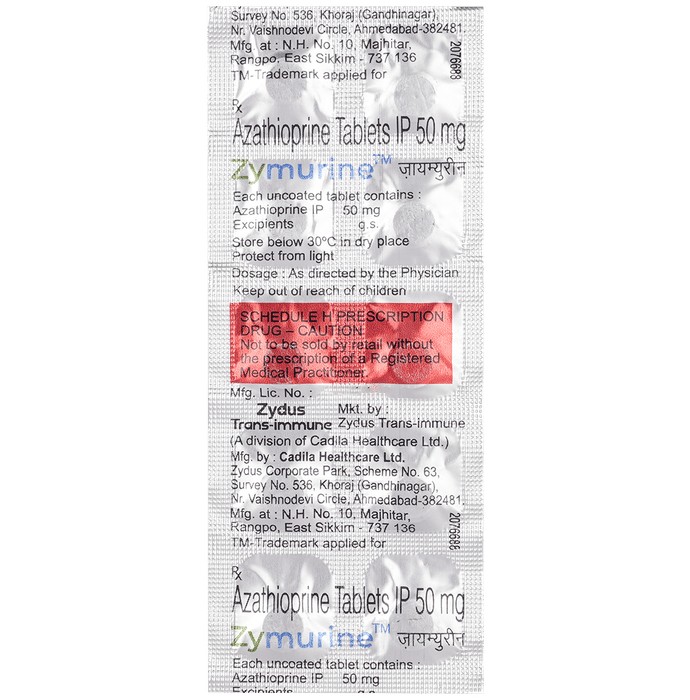
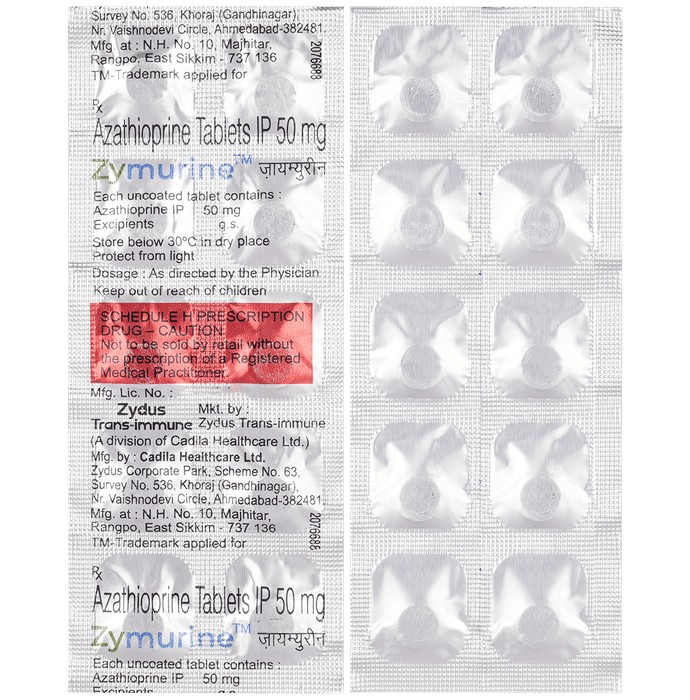
Zymurine Tablet

Marketer
Zydus Cadila
Salt Composition
Azathioprine (50mg)
Overview Zymurine Tablet
Immunosuppressant medication, Zymurin, is administered to prevent organ rejection post-transplant (kidney, heart, liver, etc.) and manage rheumatoid arthritis. Its mechanism involves suppressing the immune system to avoid attacking the transplanted organ. Dosage and frequency depend on the specific transplant; strictly adhere to your physician's prescribed regimen, which should include taking the medication with food. Consistent use is crucial for optimal results; discontinuation significantly elevates the risk of transplant rejection. Potential adverse effects are numerous; common ones include nausea, appetite loss, and heightened bleeding risk. Immunosuppression increases infection susceptibility and cancer risk. Report any concerning side effects immediately to your doctor. Zymurin is contraindicated during pregnancy, attempts at conception, or breastfeeding due to the risk of birth defects and miscarriage. Consult your doctor prior to use if you experience infections, unusual bleeding or bruising, or are taking other medications, as interactions are possible. Regular blood tests will monitor blood cell counts.
Primary Ingredients of Zymurine Tablet
No information provided. Please provide the text you wish me to rephrase.
Uses of Zymurine Tablet
Immunosuppression for transplant recipients and management of rheumatoid arthritis.
Major Benefits of Zymurine Tablet:
Follow your doctor's instructions precisely regarding the dosage and treatment length for this medication. Ingest the Zymurine Tablet whole; do not crush, chew, or fracture it. Administer this medication with a meal.
Common Side effects of Zymurine Tablet:
- Decreased white blood cell count
- Increased bleeding tendency
- Nausea
- Infection
- Loss of appetite
How to use Zymurine Tablet:
Follow your doctor's instructions precisely regarding dosage and treatment length for this medication. Ingest the Zymurine Tablet whole; avoid chewing, crushing, or breaking it. Administer this medicine with a meal.
How Zymurine Tablet works:
Immunosuppressant Zymurine tablets subdue the body's immune response, thereby mitigating the rejection of transplanted organs. Furthermore, this medication inhibits inflammatory chemical signals, alleviating swelling, redness, and inflammation characteristic of specific arthritic conditions.
SAFETY ADVICE
 AlcoholCONSULT YOUR DOCTOR
Alcohol consumption alongside Zymurine Tablets may pose unknown risks. Seek medical advice before combining them.
 PregnancyCONSULT YOUR DOCTOR
Taking Zymurine tablets during pregnancy is considered unsafe due to established risks to the fetus. Nevertheless, a physician might exceptionally prescribe it in critical circumstances where the potential advantages outweigh the hazards. Always seek medical advice.
 Breast feedingCONSULT YOUR DOCTOR
Breastfeeding mothers should likely avoid Zymurine tablets. Available human data indicates a potential for the medication to transfer to breast milk, posing a risk to the infant.
 DrivingCONSULT YOUR DOCTOR
The effect of Zymurine Tablet on driving ability is undetermined. Refrain from operating a vehicle if you develop symptoms impairing concentration or reaction time.
 KidneyCAUTION
Patients with kidney impairment should use Zymurine Tablets cautiously, potentially requiring dosage modification. Consult your physician. Zymurine Tablets are contraindicated in individuals with severe kidney disease.
 LiverCAUTION
Patients with liver impairment should use Zymurine Tablets cautiously, potentially requiring dose modification. Consult your physician for guidance. Zymurine Tablets are contraindicated in individuals with severe hepatic dysfunction. Routine monitoring of liver enzyme levels is recommended during treatment.
What if you forget to take Zymurine Tablet :
Should you forget a Zymurine Tablet dose, take it immediately. If, however, your next dose is nearly due, omit the missed dose and resume your usual dosing pattern. Never take a double dose.
Facts to Know About Zymurine Tablet
| Label | Value |
|---|---|
| Chemical Type | Purine Nucleoside Analogs |
| Developing Habits | No. |
| Treatment Category | Cancer Medications |
| Action Class | Purine analog immunosuppressants |
 3,018 People bought this recently